
What to Do in Mauritius? Our Highlights & Must-See Sights on a Map!
Latest update: July 24, 2023
Mauritius! The name of the island is synonymous with a dream vacation. Great beaches, luxury hotels, honeymoon – those were the first three associations that came to mind before our trip to Mauritius.
And all three points are definitely true, but those aren’t the only things to do!
Mauritius also has a lot of fascinating sights to offer.
We really weren’t aware of that before our trip. Spectacular waterfalls, breathtaking landscapes, temples, churches, and lively markets – Mauritius has it all.
We spent a whole week on the island with a rental car and in this post, we’ll show you our highlights and the must-see sights in Mauritius.
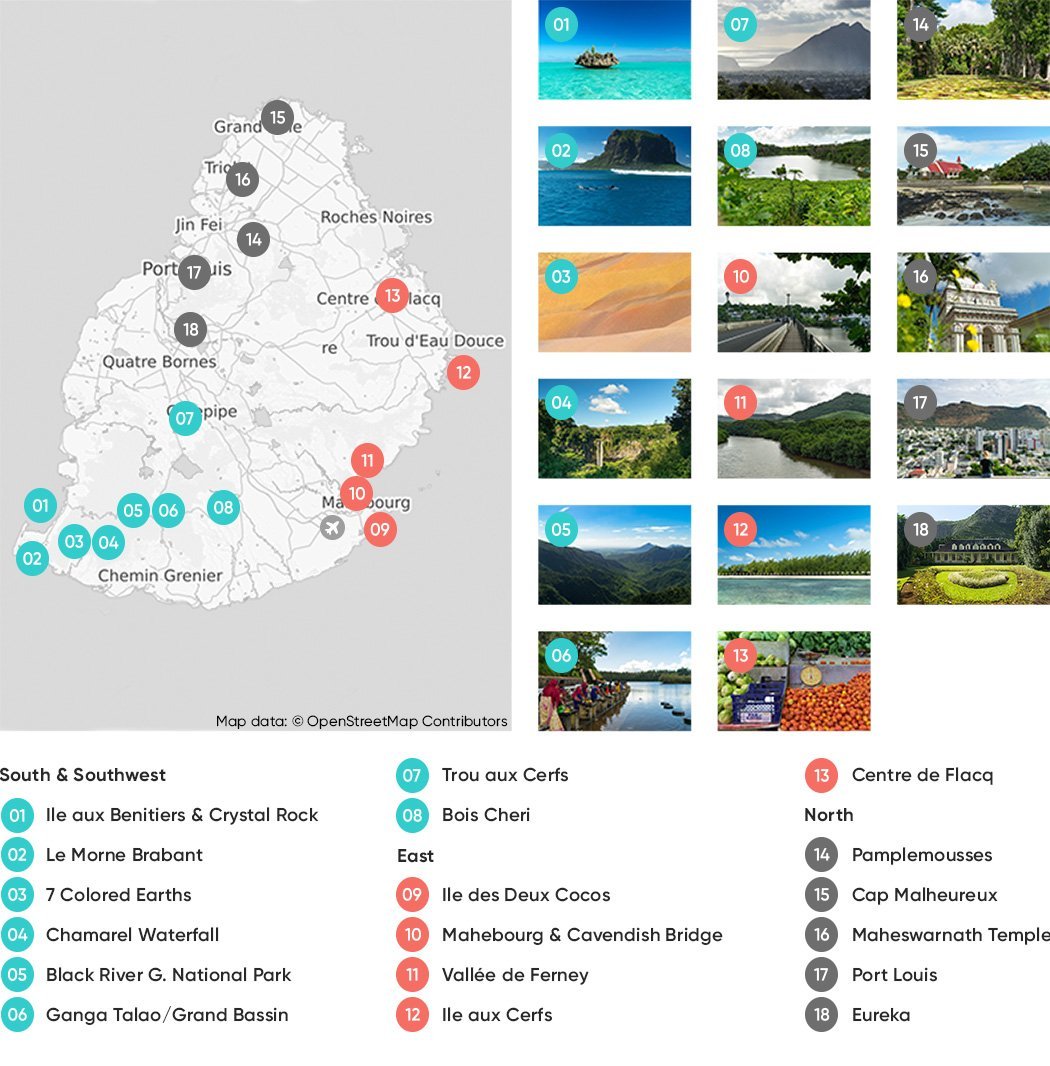
All Mauritius sights on a map
We’ve sorted the sights in Mauritius by region so you can can a good idea which places you can see in a day.
The sights in the north of the island are grey on the map, the sights in the south and southwest of the island are turquoise, and the ones in the east are red.
Must-see sights in the north of Mauritius
Let’s start in the north of the island, which has some very exciting sights to offer.
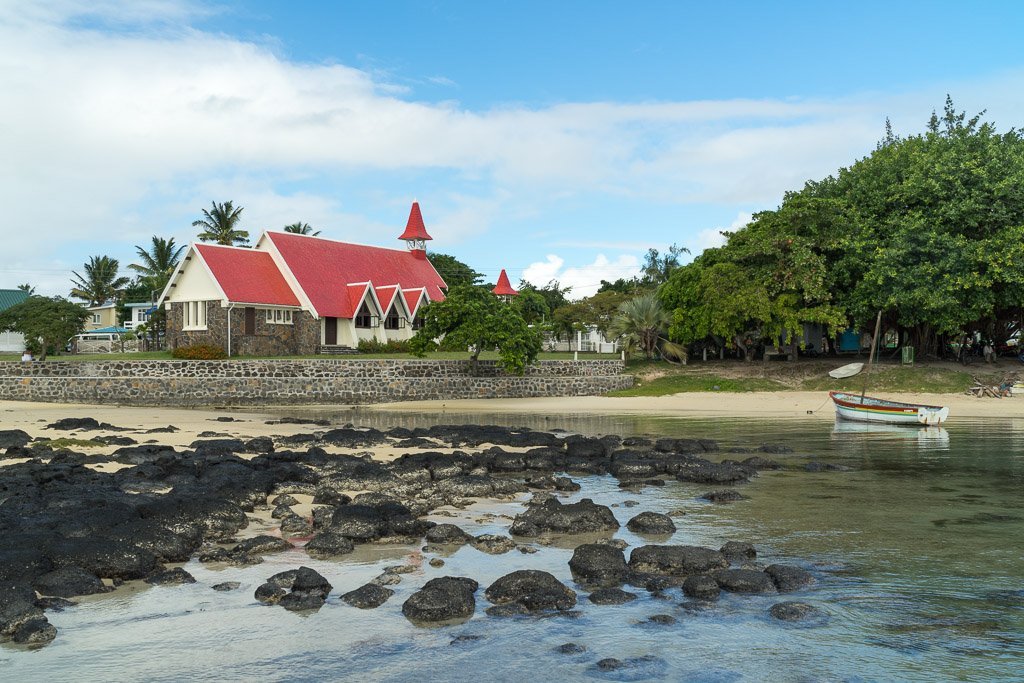
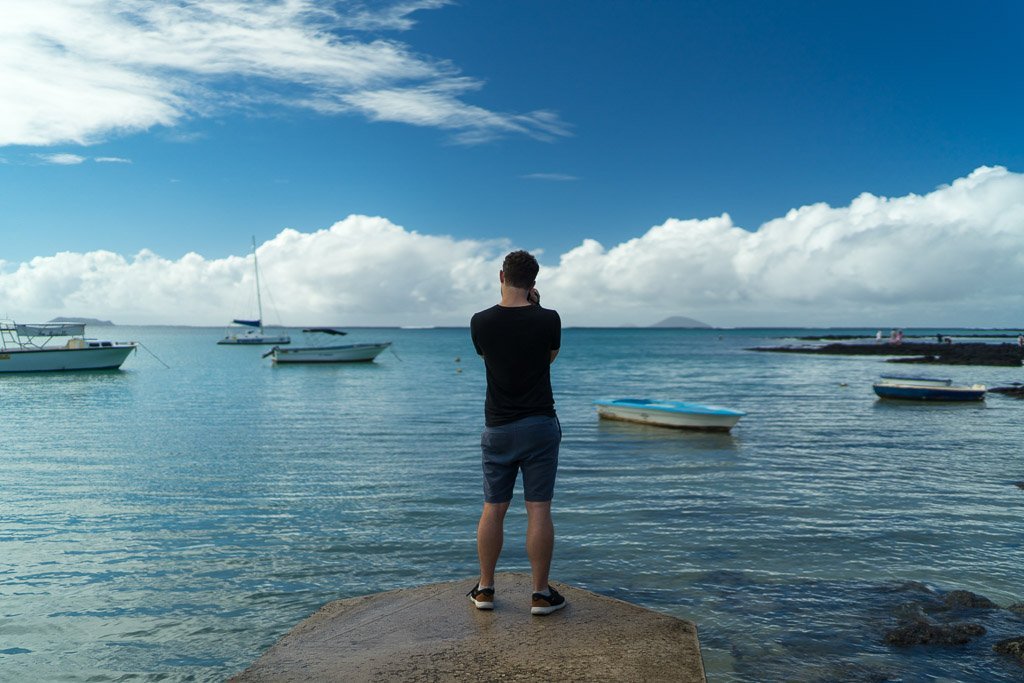
Cap Malheureux
Cap Malheureux is a small town in the extreme north of Mauritius. Here you’ll find one of the most popular photo subjects on the island: the church Notre Dame Auxiliatrice with its characteristic red roof.
Fun fact: Cap Malheureux means Cape of Misfortune. It’s not completely clear where the name comes from. The most likely theory is that the French gave the cape its name because they were defeated there in a battle with the British.
Maheswarnath Mandir Temple
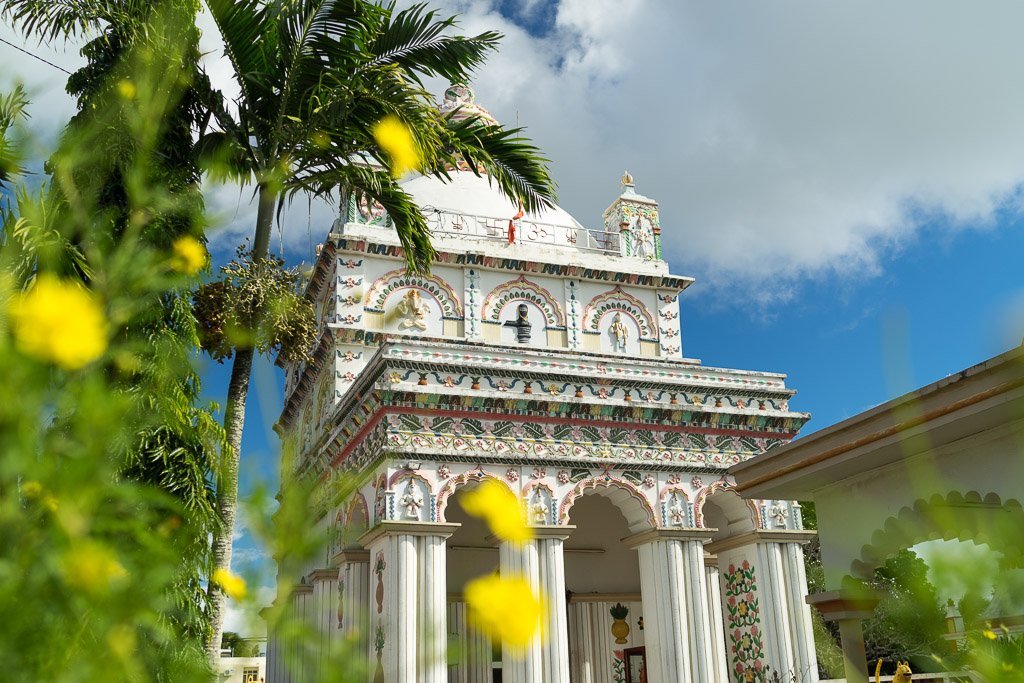
About half of the Mauritian population are Hindus, which is why there are several colorful Hindu temples on the island.
The oldest and largest of these temples is located in the north-west of Mauritius in Triolet. Although the temple was one of our highlights, we were completely alone there.
Tourists rarely seem to venture out there. But it’s definitely worthwhile because the temple is really very pretty and you can take some excellent pictures.
Pamplemousses Botanical Garden
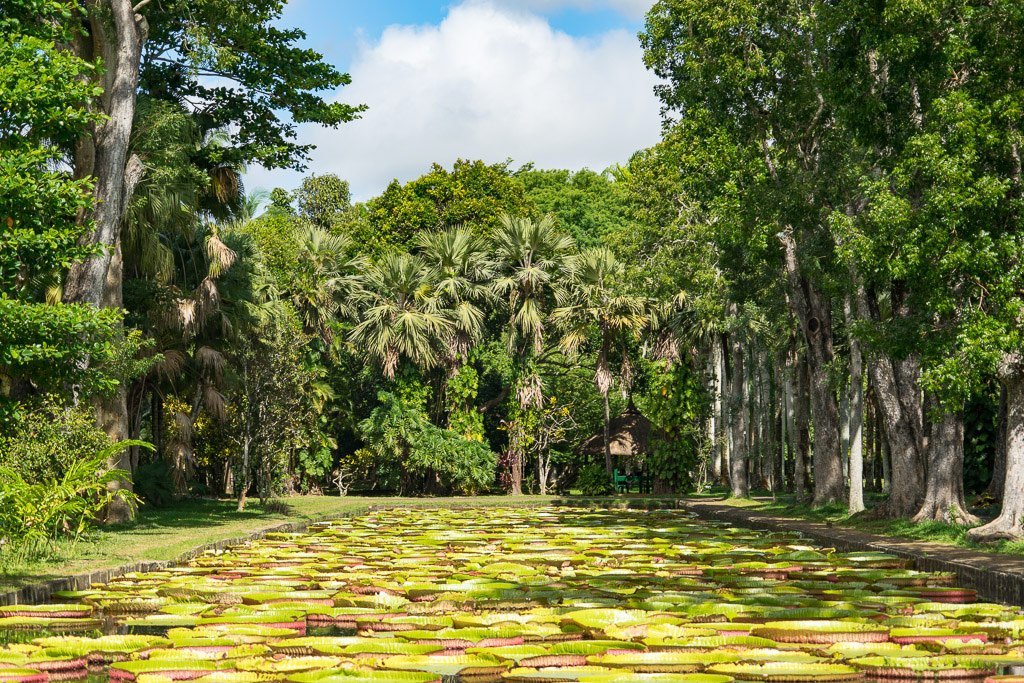
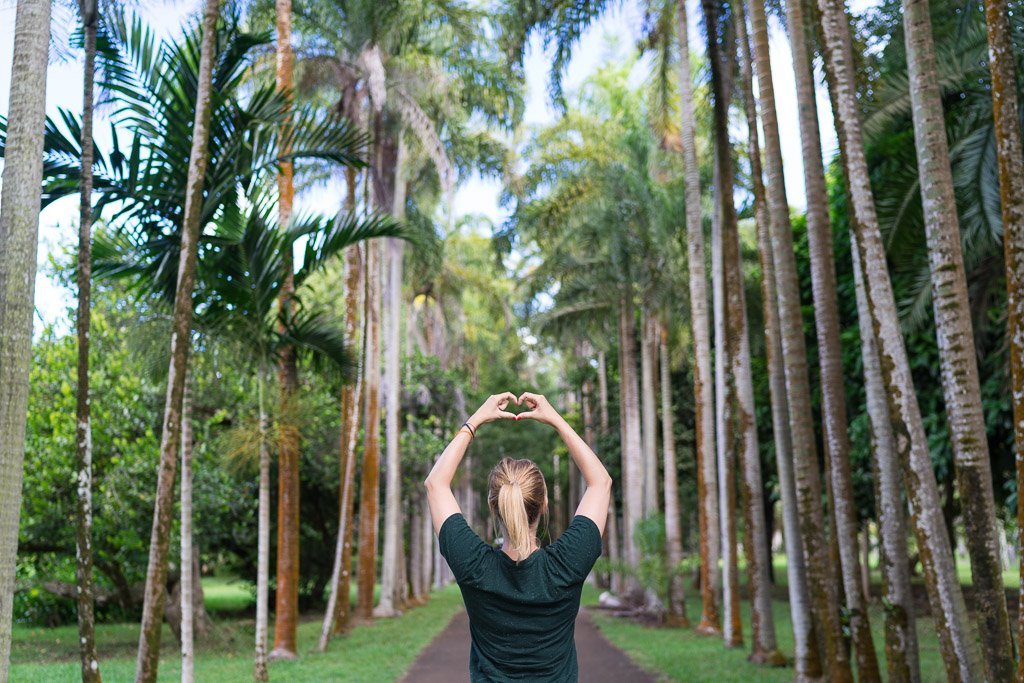
The town of Pamplemousses is home to one of the most important and most-visited sights in Mauritius: the botanical garden. Its full name is quite a mouthful – Sir Seewoosagur Ramgoolam Botanical Garden – but it’s generally known as Pamplemousses Botanical Garden.
The pond with the giant water lilies is particularly impressive, as is the nearby pond full of lotus flowers. There’s also a population of giant turtles in the botanical garden.
200 MUR (4.40 euros)
Port Louis
The island’s capital Port Louis is also located in the northeast of the island, so we’d be remiss if we didn’t mention it here.
But there’s so much to see in Port Louis that we’ve dedicated an entire section to it.
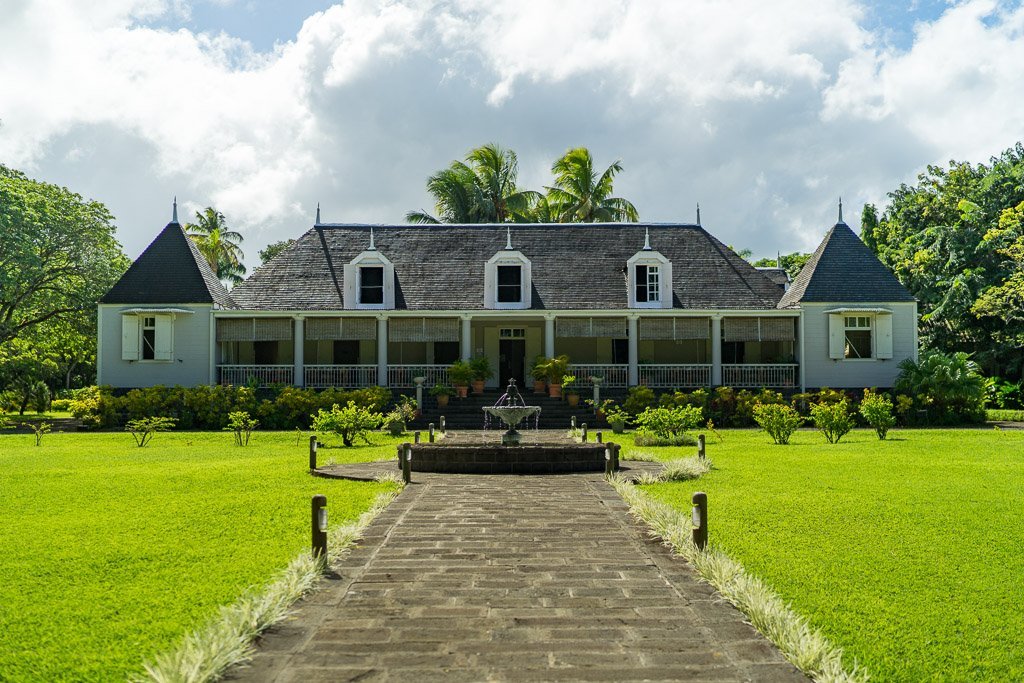
Eureka
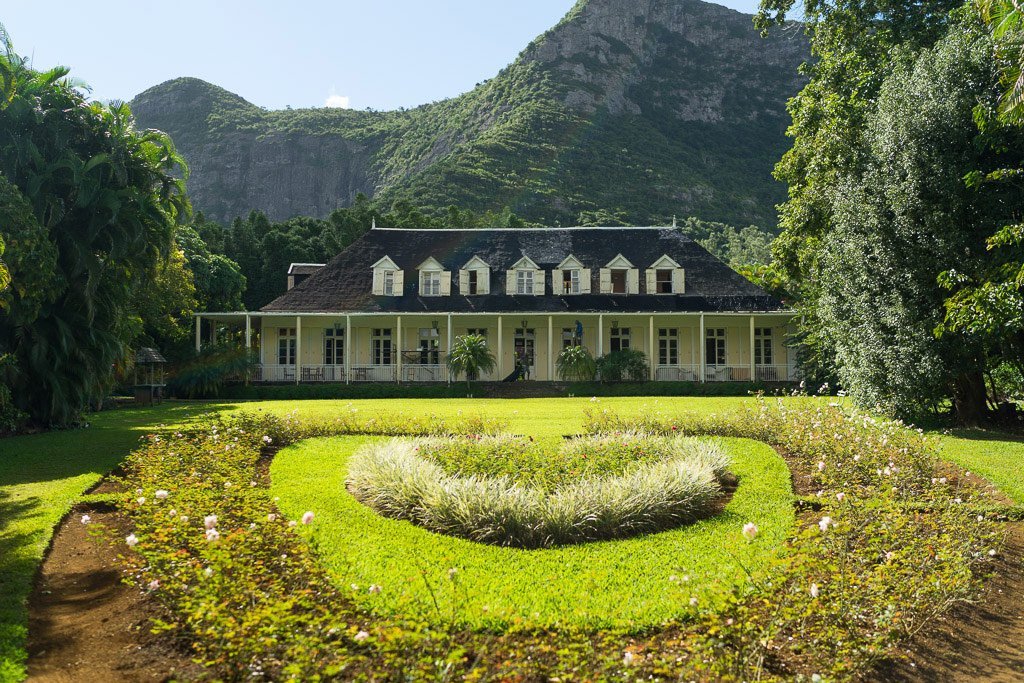
South of Port Louis is the colonial mansion Eureka. British nobles used to reside here, and today, the well-preserved mansion houses a museum that gives you a great insight into the life of the privileged people of the time.
Behind the house, a rocky trail leads downhill leading to a small waterfall. The waterfall isn’t particularly spectacular, so you can save yourself the trip.
300 MUR (6.60 euros)
Day tour through the north of Mauritius
You can easily see all these sights in one day with a rental car. You’ll even have some extra time to spend at the beautiful beach of Trou-aux-Biches, which is very close to the Hindu temple.
As an alternative to the rental, you can explore the north in a private day tour with a driver. During this tour, you’ll not only discover the highlights in the north, but will also visit the capital Port Louis. Since this is a private tour, you can customize the itinerary to suit your needs.
North of Mauritius: Private day tour
Sights and attractions in the capital Port Louis
Port Louis is the capital of Mauritius. At first sight, the city isn’t particularly attractive, as only a few old buildings are preserved. Nevertheless, the city still has some interesting sights to offer.
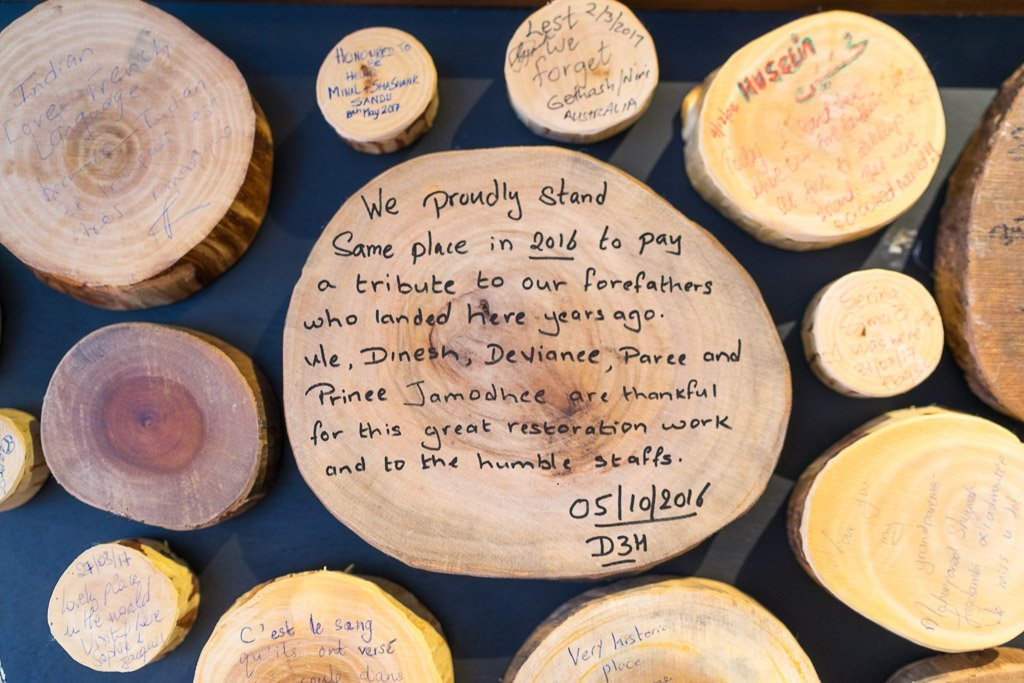
Aapravasi Ghat
Aapravasi Ghat, next to Le Morne Brabant Mountain, is the only Unesco World Heritage site in Mauritius and is as connected to the history of the country as hardly any other place on the island.
More than half a million workers arrived at Aapravasi Ghat between 1849 and 1923 to work for the British on the sugar plantations.
A large percentage of the Mauritian population are descendants of the workers, many of whom came from India and often worked and lived under miserable conditions.
Only a few foundation walls of the building complex by the port are still standing today. In addition, there’s a very interesting exhibition with information about the history of the workers.
Central Market of Port Louis
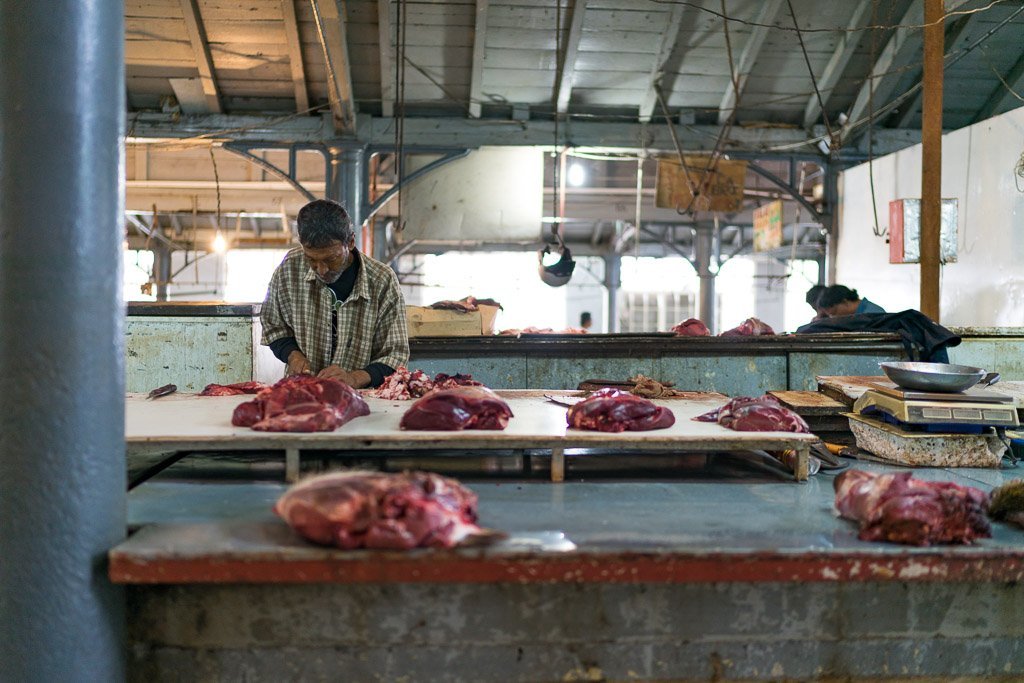
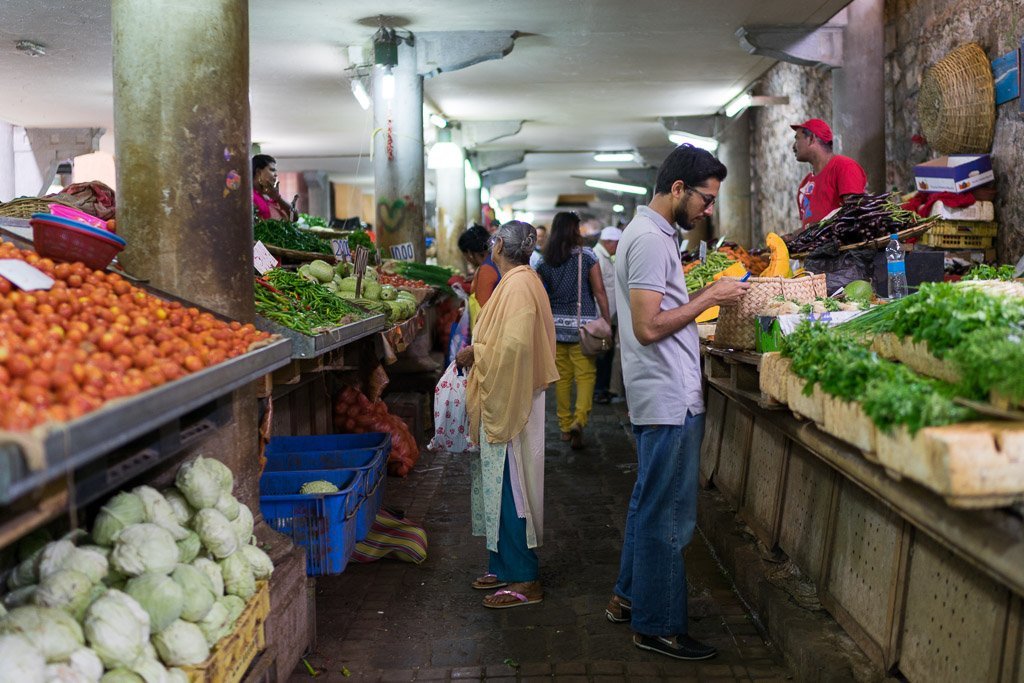
The Central Market in Port Louis is the central trading point for the entire country. Various market halls offer everything the local population needs: fruit, vegetables, meat, fish, textiles.
A visit is absolutely worthwhile even though the market halls that sell meat may take some getting used to.
Closed on sunday
Fort Adelaide
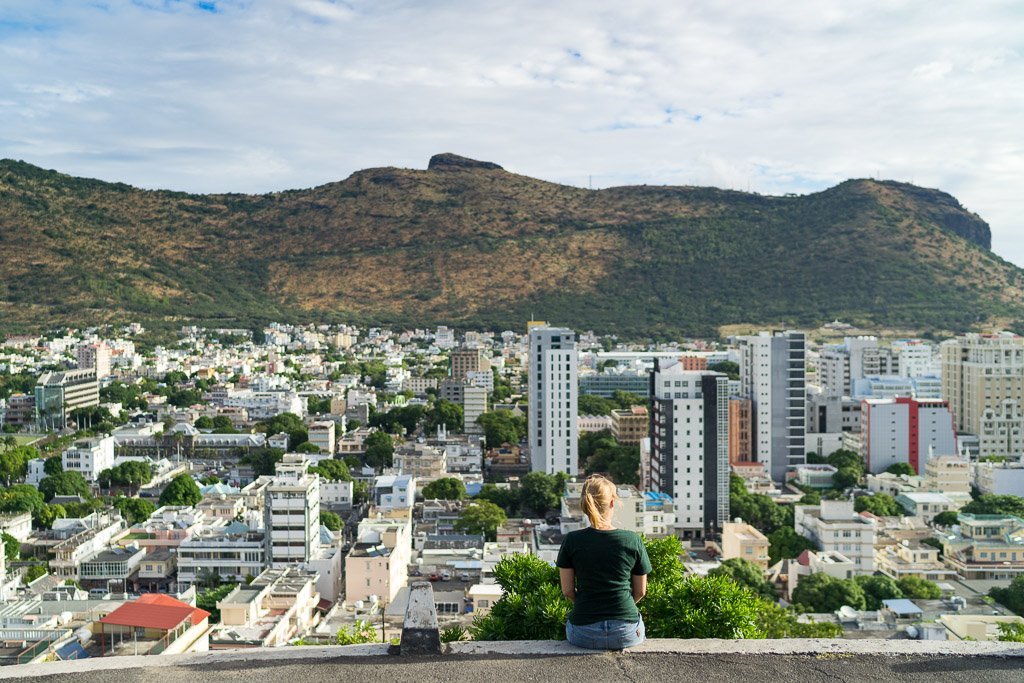
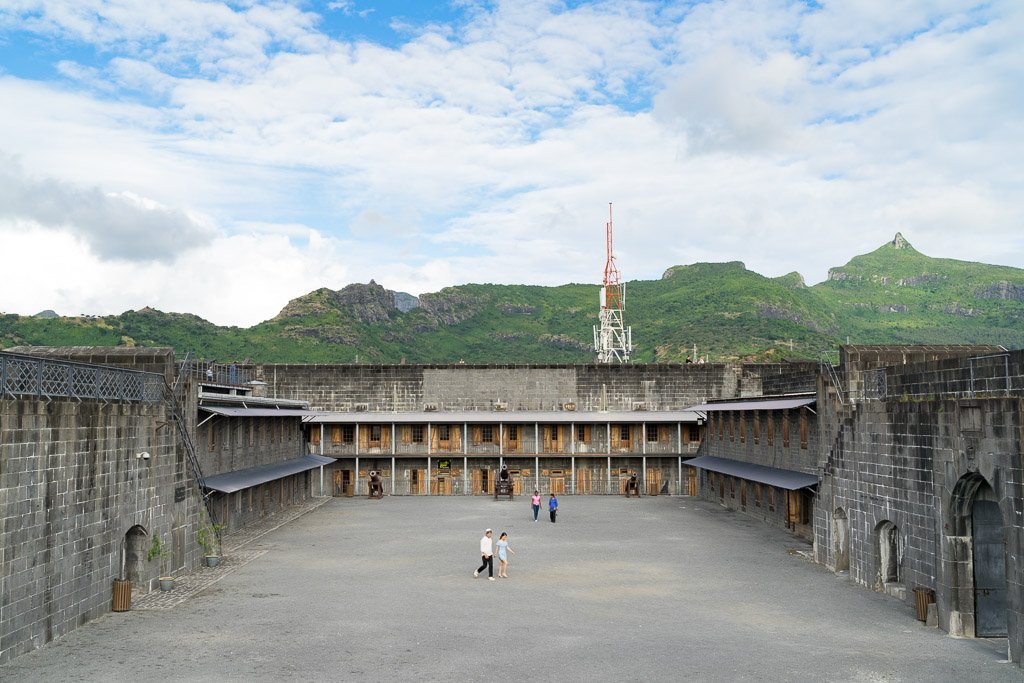
The Fort Adelaide was once built by the English and still towers over Port Louis on a hill. The building itself is relatively unspectacular, only a few cannons are left to remind you of its former purpose.
But the great view that extends over the entire city is definitely worth the climb. The walk to the top takes about 15 to 20 minutes on foot. That can be pretty exhausting in the noontime heat during peak season.
Closed on saturday and sunday
Champ de Mars Racecourse
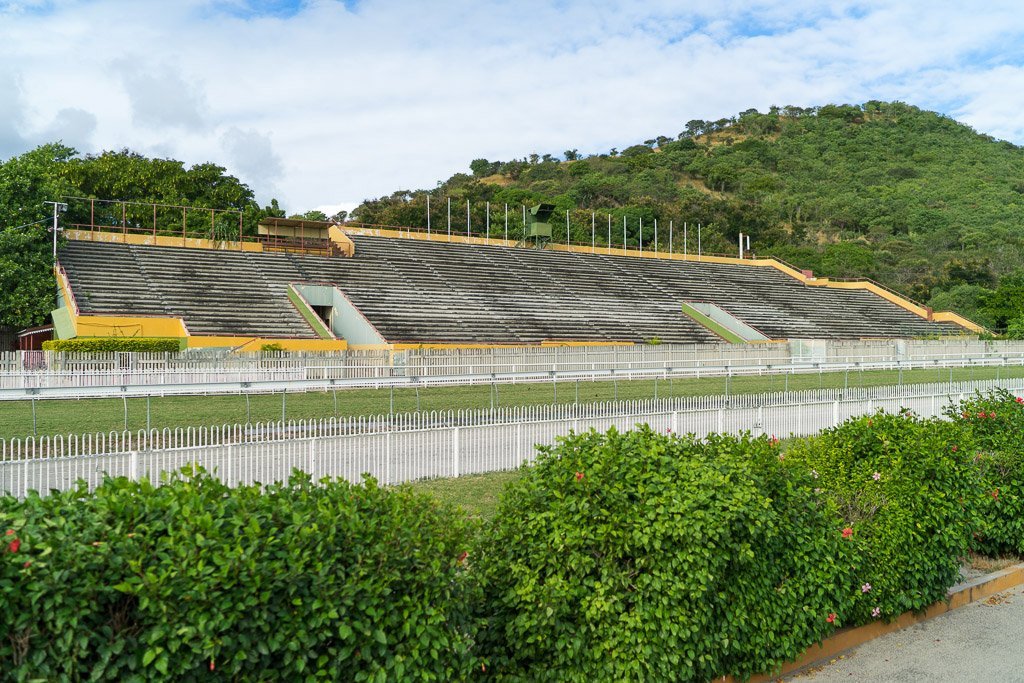
Champ de Mars is the world’s second-oldest horse race track. Horse races have been held here since 1812. The track has a length of 1300 meters and looks impressive even when there’s no race going on.
But things really heat up every Saturday from May to November when thousands of locals make their way to the race track and try their luck betting. There are 8 races on every race day. It starts at 12:30 pm and the last race is at 5 pm.
Caudan Waterfront and the Blue Penny Museum
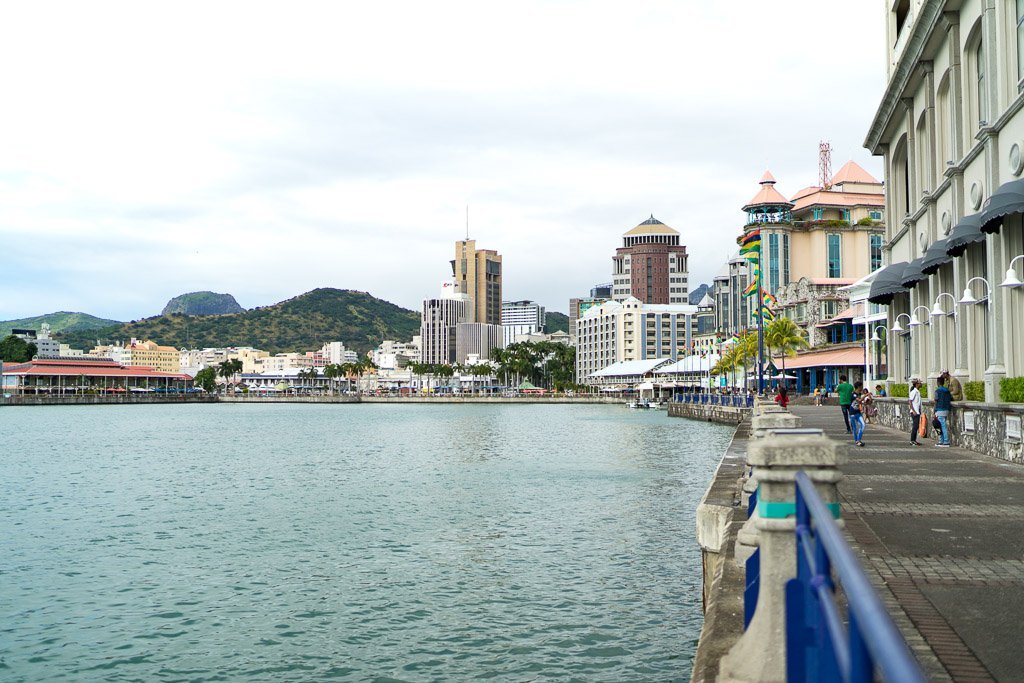
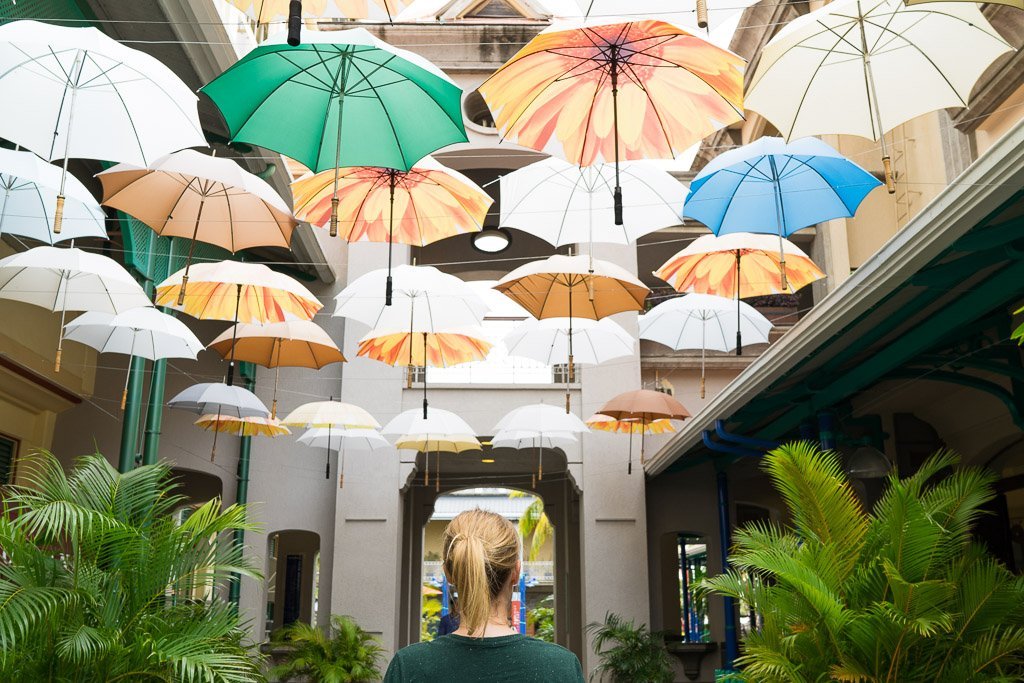
The Caudan Waterfront is the modern shopping district of Port Louis. Sounds boring at first, but it’s actually pretty nice. Having opened in 1996, the area is – as the name suggests – right on the water and you can enjoy a nice a little stroll there and have something to eat and drink.
The grounds of the Caudan Waterfront are also home to the Blue Penny Museum. The exhibition is mainly about the history of the island, but most visitors come here because of what is probably the most famous stamp in the world: the Blue Mauritius!
The Blue Mauritius (Blue Penny) can be seen here, as is the almost equally valuable Red Mauritius (Red Penny).
Temples, churches, and mosques in Port Louis
As the capital, Port Louis is also the cultural and religious center of the country. You’ll find several places of worship for the different religions in Port Louis.
The Chinese Nam Sun Tin How Temple right next to the racetrack, the Jummah Mosque near the Central Market, and the Cathedral of Port Louis, halfway between the temple and the mosque, are all very worthwhile.
Day tour through Port Louis
We visited all the sights in Port Louis one day. We definitely don’t recommend driving to Port Louis in a rental. Parking is scarce and driving in the city isn’t much fun.
You can easily get to Port Louis from anywhere on the island by bus. There are two large bus stations in Port Louis. At Immigration Square, right next to the Central Market, the buses depart for the north; at Victoria Square about 800 meters to the west, the buses depart for the south.
You can easily get to all the famous sights on foot once you’re in town.
The guided tour through the north we recommended above also includes all the main attractions of Port Louis if you don’t want to explore the city on your own.
Must-see sights in the south and southwest of Mauritius
The southwest of Mauritius probably has the largest collection of must-see sights on the island.
Seven Colored Earths and Chamarel Waterfall
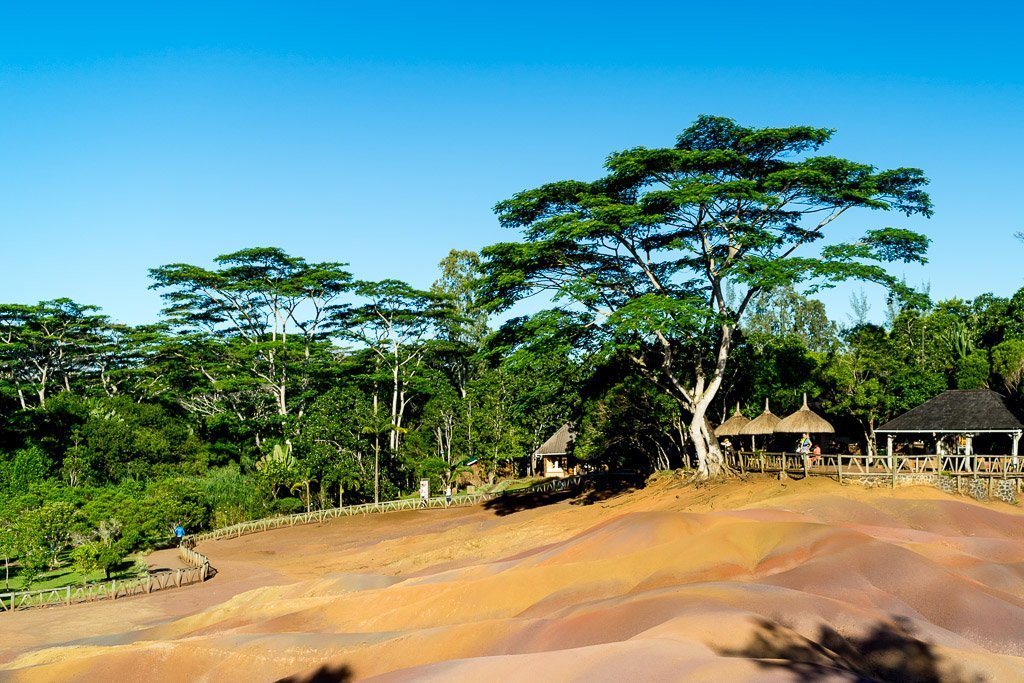
The Seven Colored Earths are a very special natural phenomenon. The wavy ground of the Seven Colored Earths shimmers in different colors and is a popular photo subject. The colors really come out in the late afternoon when the sun is low in the sky.
On the way to the Seven Colored Earths, you’ll also pass the Chamarel Waterfall. The waterfall is quite narrow, but drops down more than 90 meters.
You have to pay an admission fee at the entrance for the entire Chamarel plain.
from 500 MUR (11 euros)
Black River Gorges National Park
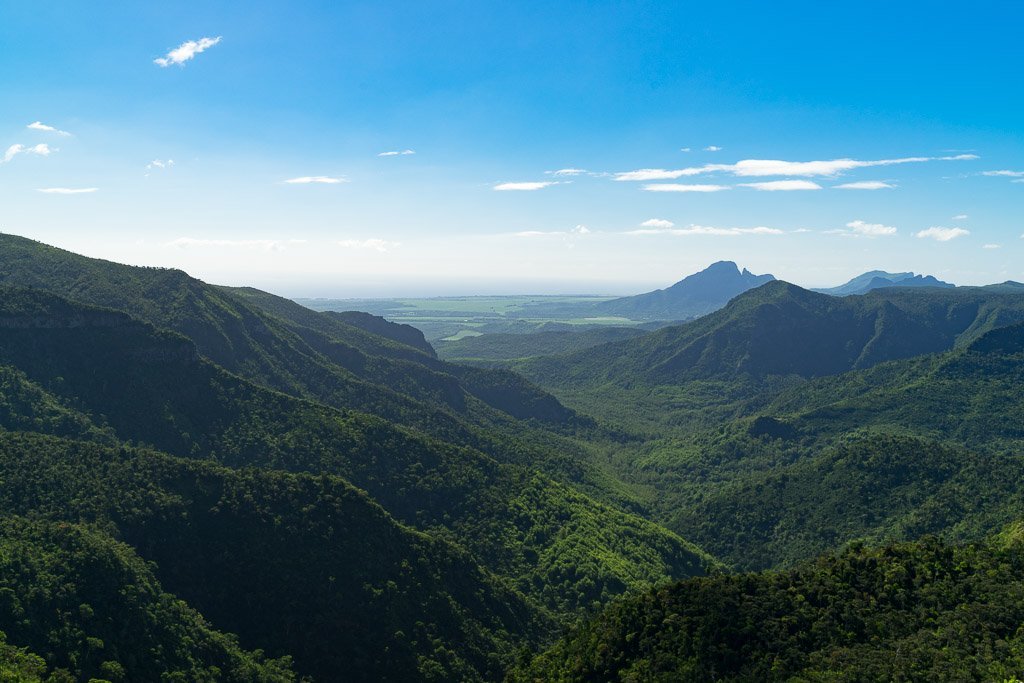
Just behind Chamarel is the green lung of Mauritius: the Black River Gorges National Park.
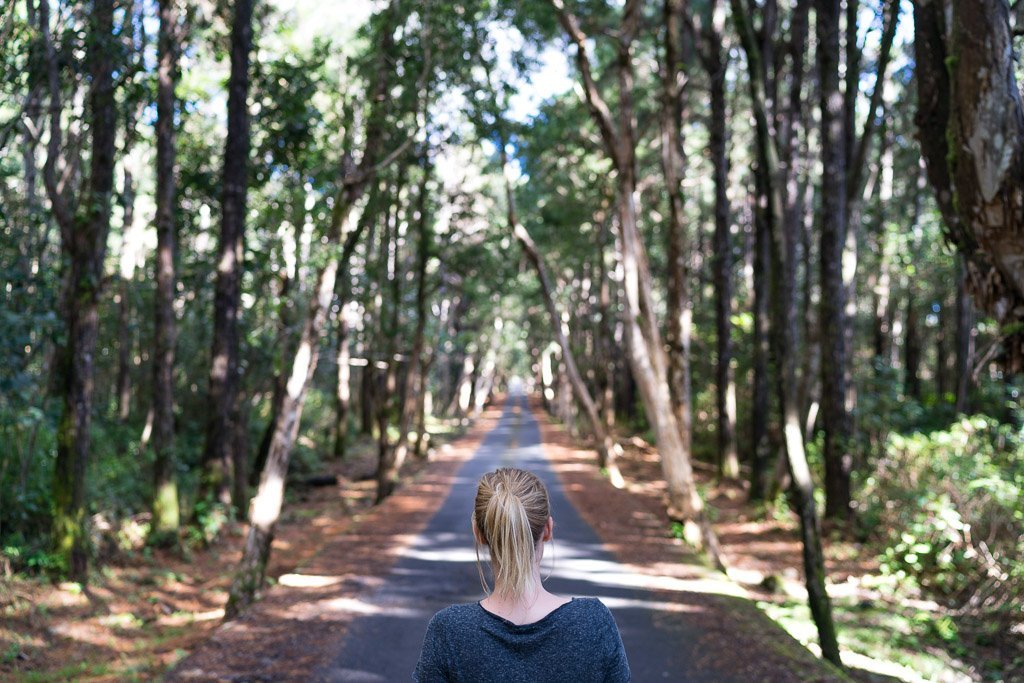
The national park offers several signposted hiking trails where you can experience a true contrast to the beach: green forests, wild monkeys, numerous waterfalls, and breathtaking views.
We’re not really that big on hiking and unfortunately didn’t have that much time, so we only drove through the national park with the car. But that’s also worthwhile, as you can stop at some of the most beautiful viewpoints.
Ganga Talao / Grand Bassin
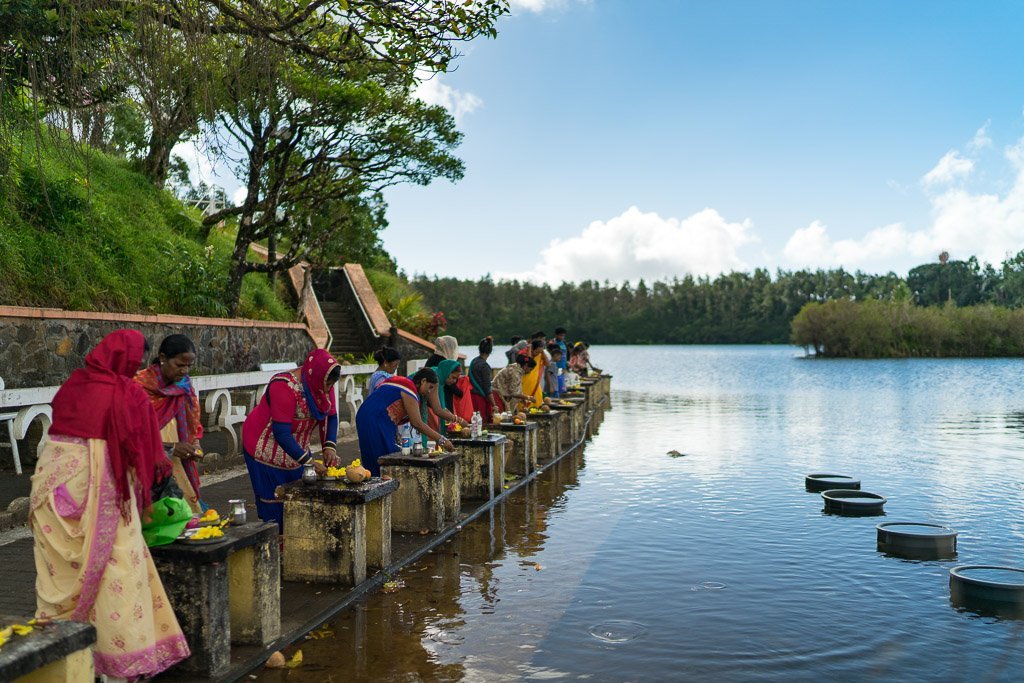
Ganga Talao or Grand Bassin is located at the eastern end of the Black River Gorges National Park. Around the lake are several Hindu statues and in fact Ganga Talao is the most important Hindu pilgrimage site outside of India.
A four-lane road leads to Ganga Talao, which was completely oversized for the time we were there, because there were only a handful of pilgrims by the lake besides us.
But the wide streets are there for a reason: Every year at the end of February/beginning of March, the Maha Shivaratree Festival takes place at Ganga Talao and more than 500,000 white-clad Hindus flock to the lake.
Bois Cheri tea plantation and tea route
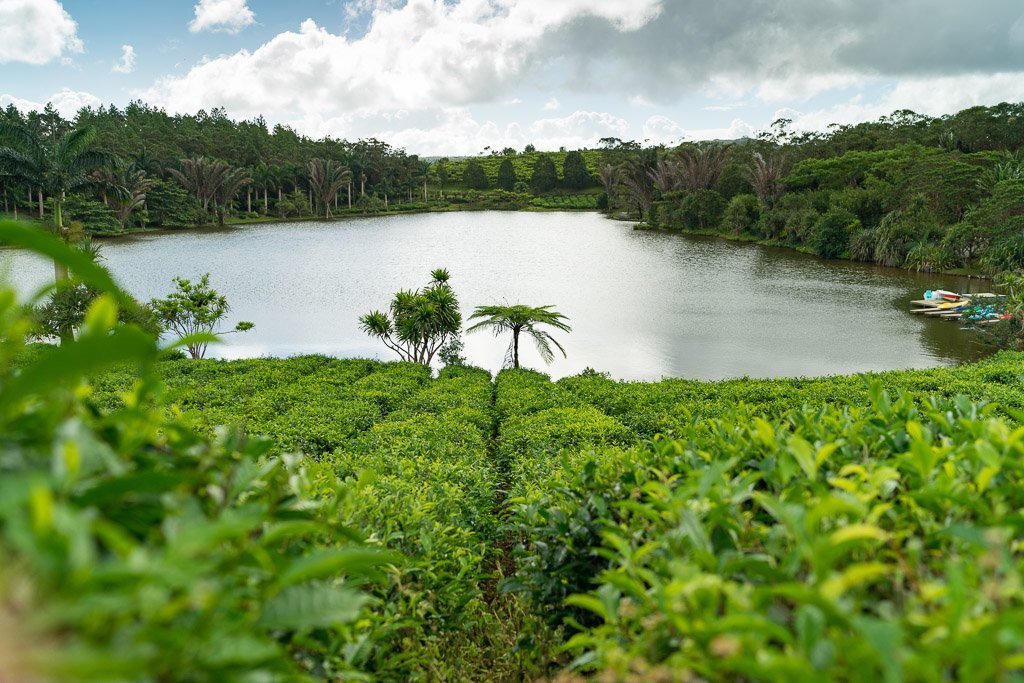
A few kilometers further east from Ganga Talao is the tea plantation Bois Cheri. We’d only ever previously seen tea plantations on Sri Lanka, so we were surprised to find them in Mauritius.
In Bois Cheri, not only can you take a look at the green plantations, but you can also visit the tea factory and have the entire manufacturing process explained to you.
The restaurant has the best views. Access to the restaurant costs 200 MUR, but it’ll be credited towards your food and drink order.
However, Bois Cheri is just one stop on the so-called ‘Tea Route’. It leads from the Domaine des Aubineaux via Bois Cheri to Saint Aubin.
Closed on sunday
from 200 MUR (4.40 euros)
Trou aux Cerfs
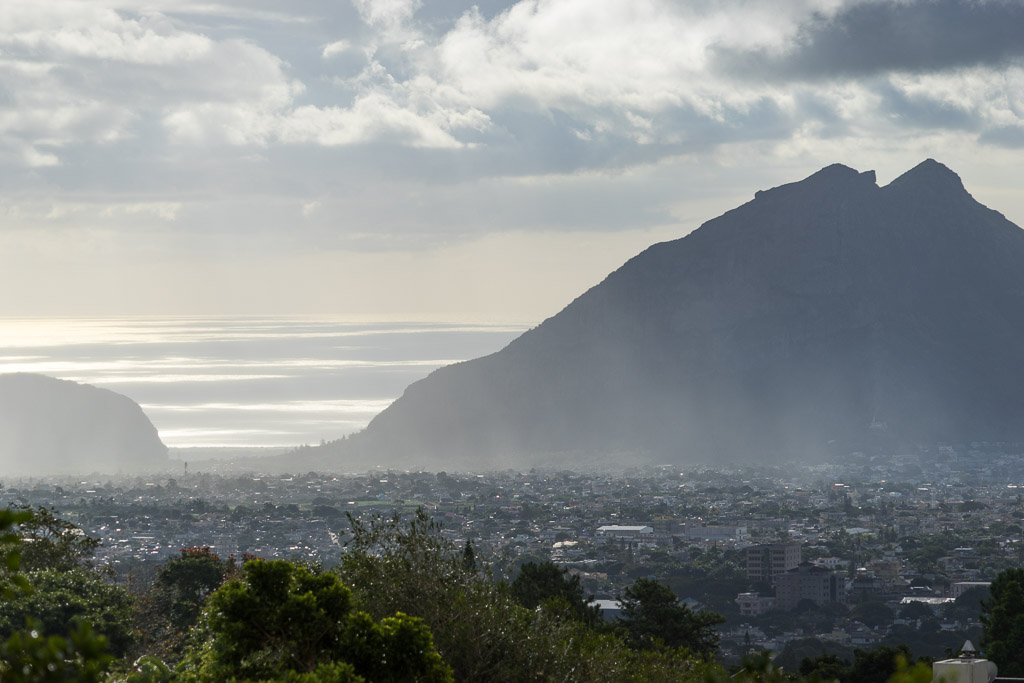
The Trou aux Cerfs is a 650-meter high volcano in the interior of the island of Mauritius. The volcano has been dormant for a long time and there’s a small lake in the crater.
There’s a wide path leading around the crater that gives you a great view of the island in all directions. The volcano itself isn’t that spectacular, but for the view is worth the drive to the Trou aux Cerfs.
Le Morne and Le Morne Brabant
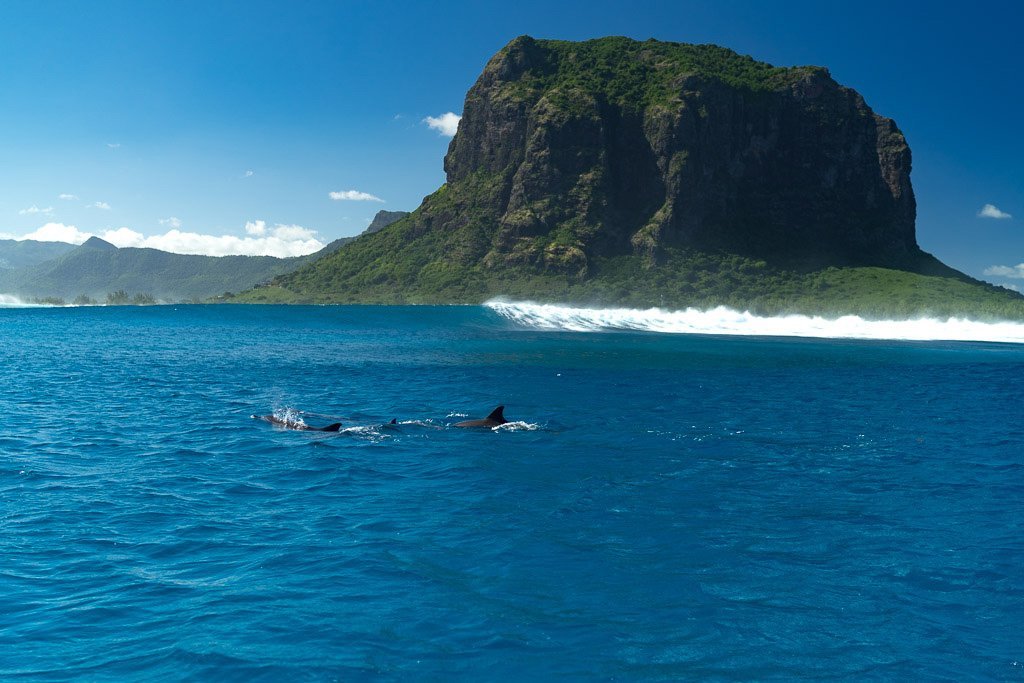
Le Morne Brabant is a 556-meter high mountain in the extreme southwest of the island. The mountain is one of two World Heritage Sites in Mauritius.
It used to be a refuge for slaves who fled the French on Mauritius. At the foot of Le Morne Brabant, the Slave Route Monument recalls the suffering of the slaves.
The mountain is now privately owned, so ascending it isn’t that simple. But it looks very impressive from the bottom too.
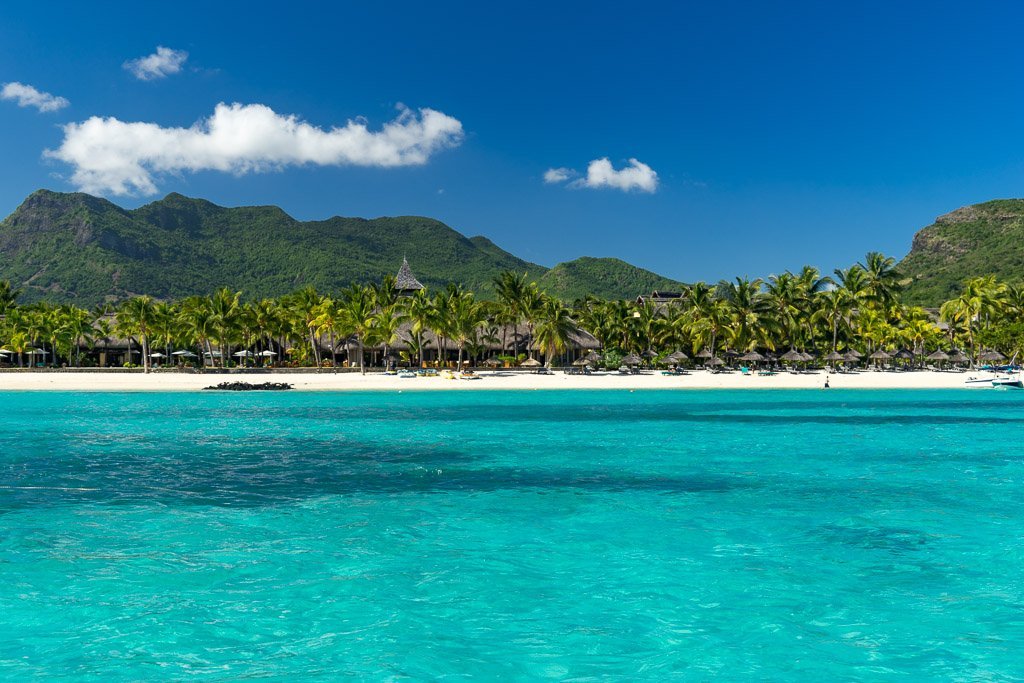
The beach of Le Morne, which is perhaps even the most beautiful beach in Mauritius, is also worth seeing.
Day tours through the southwest of Mauritius
The southwest of Mauritius is packed with highlights. It’s hardly possible to visit all the sights presented in one day. So you’d be better off splitting the southwest into two day trips.
All must-see sights can be easily explored with a rental car or alternatively as part of guided tours.
Tour tip: A really recommended scenic day tour through the wild southwest that you can book online. You’ll be able to explore most of the highlights in the area with a guide in one day.
Must-see sights in the east of Mauritius
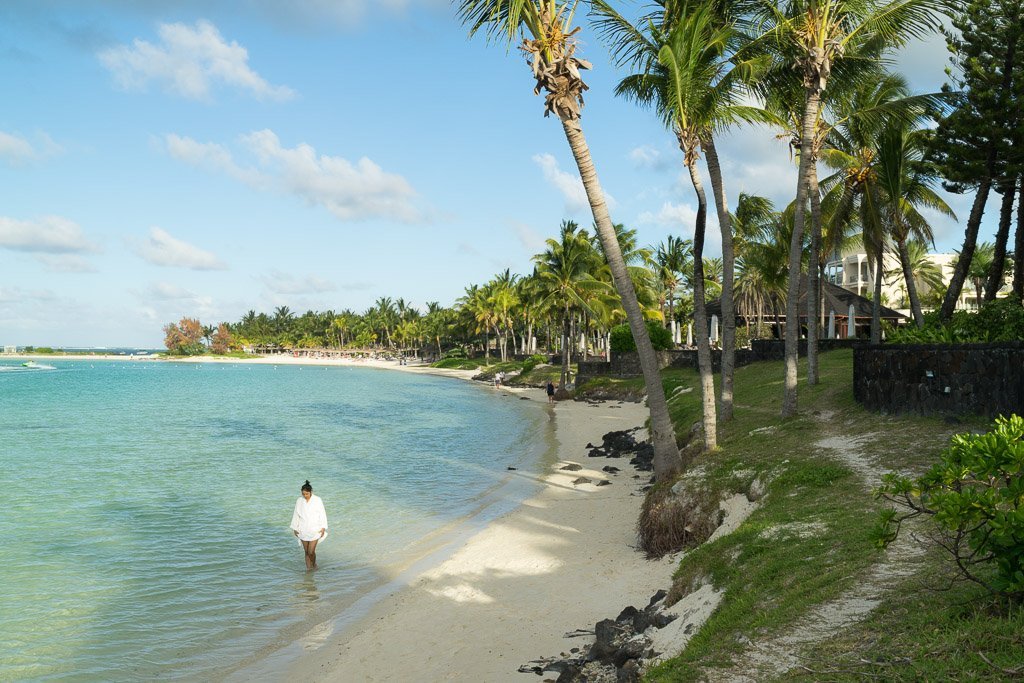
The east coast of Mauritius features some of the most beautiful beaches on the island, e.g. the long Belle Mare Beach. And where there are beautiful beaches, great hotels aren’t far behind. That’s why some of the most luxurious hotels in Mauritius are located in the east.
In addition, the east also has some interesting sights to offer.
Market in Center de Flacq
Center de Flacq is one of the larger towns in the east of Mauritius. The town has strong Indian influences. Twice a week, a large market is held in Centre de Flacq, which mainly attracts the local population.
Market days are on Wednesdays and Sundays, with Sunday being the most important day. Unfortunately, it was raining in torrents during our visit on a Wednesday, so it was pretty deserted.
Vallée de Ferney
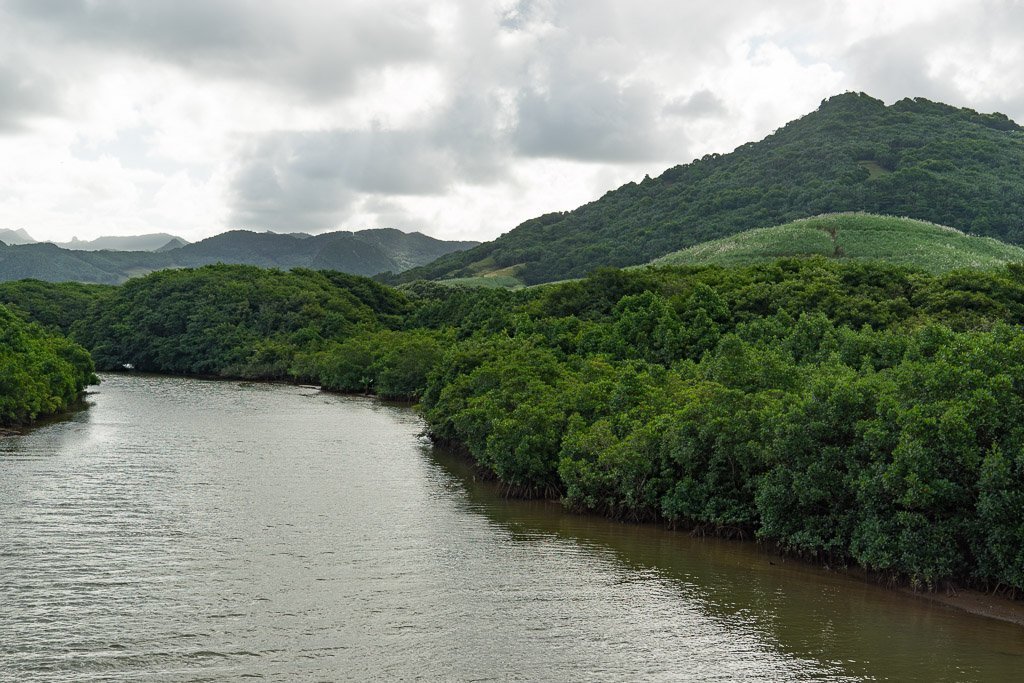
The Vallée de Ferney is a large nature reserve in the east of the island. Guided hikes and boat trips are offered there.
In addition, the area around the Vallée de Ferney features extensive sugar plantations and you can watch the tractors being loaded with sugar cane.
Mahebourg and the Cavendish Bridge
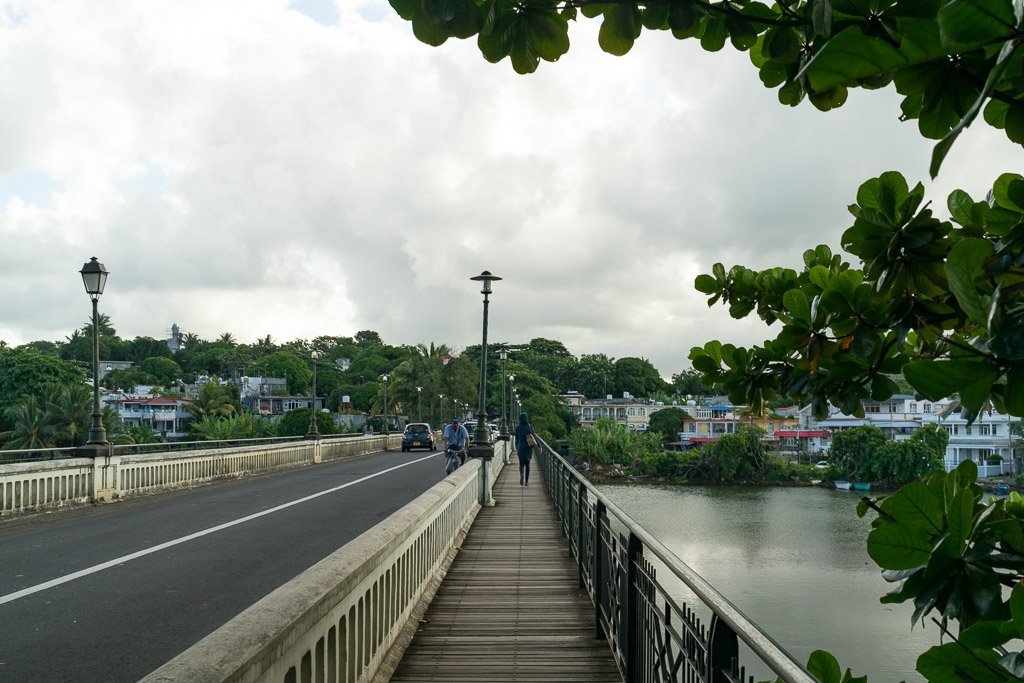
Mahebourg in the south east of Mauritius is one of the prettiest towns on the island and is great for taking a little walk. The 100-year-old Cavendish Bridge offers a nice view of the town.
Day tour through the east
Since there aren’t that many must-see sights in the east, there are hardly any guided tours in this region. We explored the area with our own rental. The coastal road is just a dream!
You can also rent a car with your own local chauffeur. This way you can plan your trip according to your preferences. And you still get great insider tips from your driver.
More information on the day tour with chauffeur/guide
Small dream islands off the coast of Mauritius
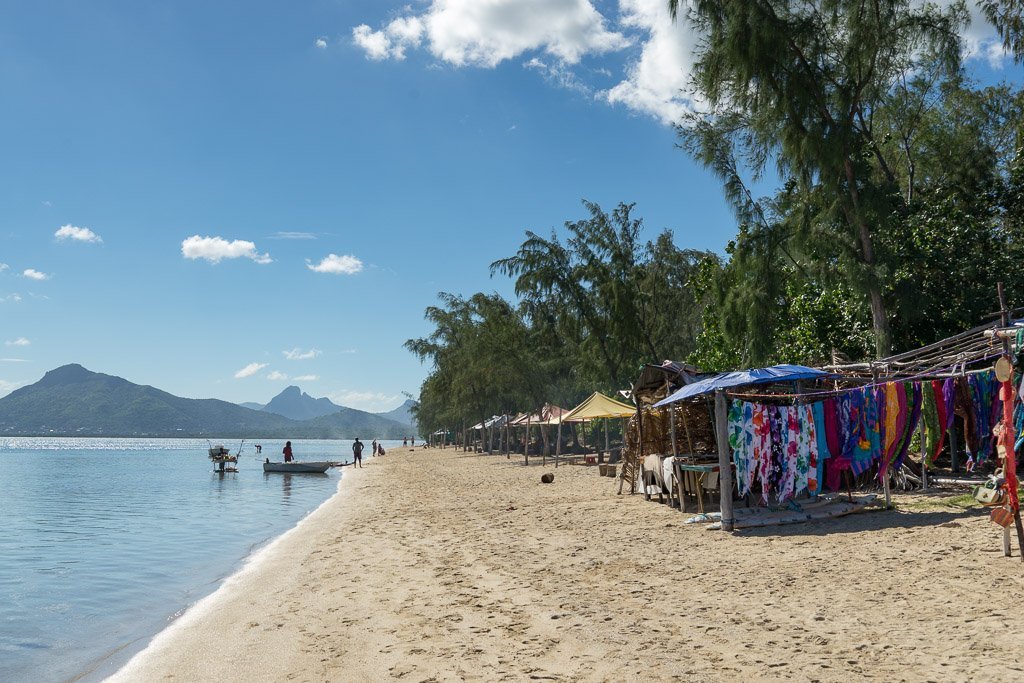
Around Mauritius there are some small islands which are often even more beautiful than the main island itself. But there aren’t really any sights there except for endless sandy beaches and turquoise water.
Just stopping on one of the islands for a quick look would be a wasted opportunity. The best thing to do is to spend a whole day there just doing nothing, relaxing, and daydreaming.
Ile aux Cerfs
The Ile aux Cerfs is located off the east coast of Mauritius and is a true island paradise. Around the island you’ll find some of the most beautiful sandy beaches that Mauritius has to offer.
In the off-season, the Ile aux Cerfs is mostly empty. During peak season, however, it can get pretty crowded around the boat dock, which also has two restaurants. But even then, the island is large enough to find a lonely spot. Just carry on walking for a few hundred meters and leave the hustle and bustle behind you.
Boats to the Ile aux Cerfs leave from Trou d’Eau Douce. Unfortunately there’s no regular ferry, only private charter boats. It takes a lot of bargaining skills and strong nerves to negotiate a reasonable price for the crossing.
A good price is 400 to 500 MUR, but you’ll often be quoted prices of up to 1,000 MUR.
It’s more convenient and stress-free to book the crossing beforehand. You’ll be picked up from the hotel, taken to the island, and then driven home again at the end of the day.
It’s just a better start to the day if you don’t have to spend ages haggling.
To the 6-hour Ile aux Cerfs tour with lunch
A catamaran ride is an even cooler experience. This tour is a bit more exclusive and includes a barbecue on board and all drinks.
To the day tour catamaran trip to the Île aux Cerfs
Ile aux Benitiers and the Crystal Rock
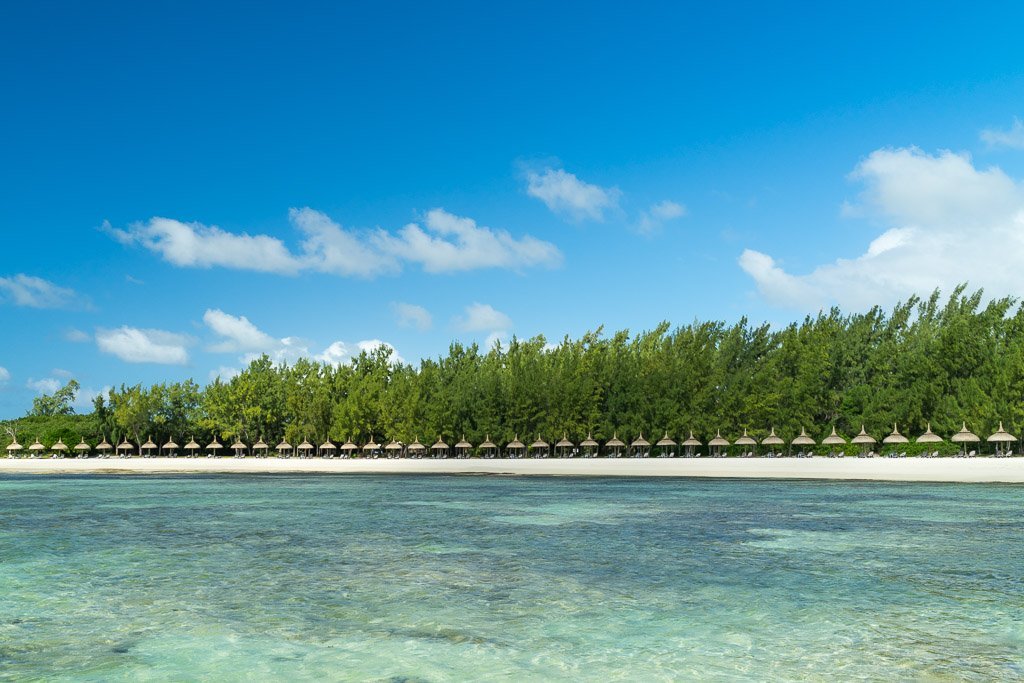
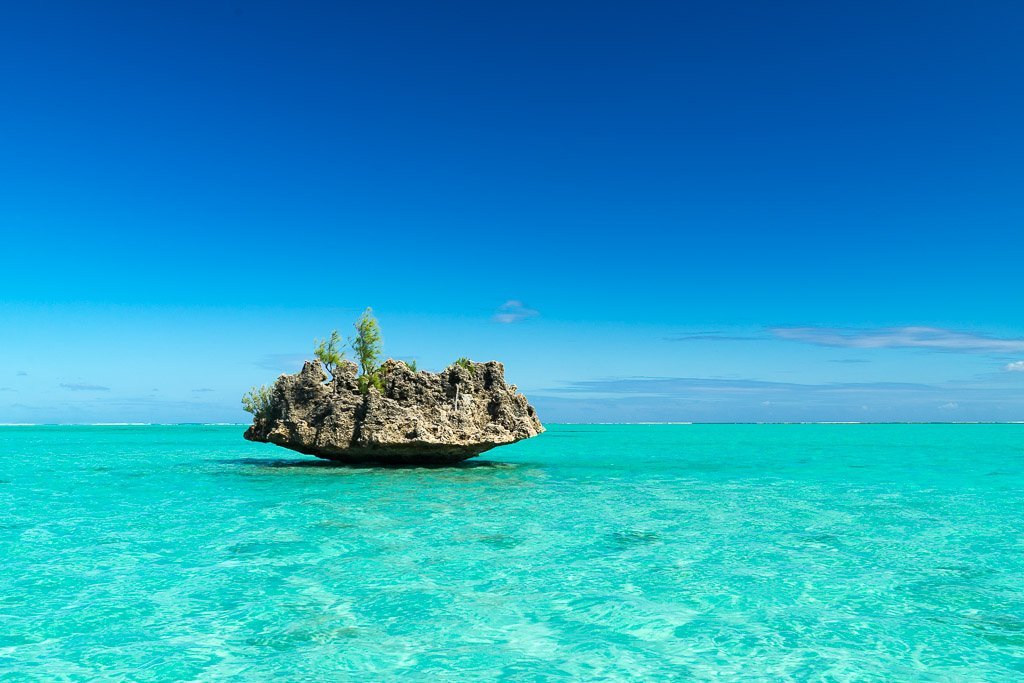
The Ile aux Benitiers is in the southwest. The island is a whole lot smaller than the Ile aux Cerfs, but at least just as heavenly.
The water by the long sandy beach is the most turquoise you could possible imagine. The so-called Crystal Rock jutting out of the water just off the island’s coast is a great subject for some amazing photos.
Tours to the Ile aux Benitiers are usually offered in conjunction with a dolphin watching trip. We went on one and actually saw a lot of dolphins.
But many boatmen really chase the poor things to exhaustion, which leaves a sour taste. Dolswim is a company with a reputation of having a less aggressive approach to dolphin-watching.
To the dolphins and Ile aux Benitiers day tour
Ile des Deux Cocos
The Ile aux Cerfs and the Ile aux Benitiers are no longer hidden gems anymore. Of course the two islands are still a dream, but it can get pretty full there during peak season.
But Mauritius wouldn’t be Mauritius if it didn’t have some more small, hardly-visited islands up its sleeve. One of these is the Ile de Deux Cocos. The small private island is located in the southeast of Mauritius and guarantees fantastic hours without masses of tourists.
Of course you can also book trips to the Ile des Deux Cocos online, which include food and drink, a snorkeling tour, and a ride in a glass-bottom boat.
To the tour to the Ile des Deux Cocos
How to explore the sights in Mauritius
Despite its many must-see sights, Mauritius isn’t very large. Even for the longest route from the far north to the deep south you don’t need more than 2 hours by car.
There are three options to explore the sights: by rental car, with public buses, and with a private driver.
Exploring Mauritius by car
We explored Mauritius with a rental car. That’s certainly the most flexible option, since you are so completely free to plan your day and can also add unscheduled stops as you wish.
Traffic is on the left-hand side in Mauritius, which may be a bit unfamiliar to many European drivers. We recommend taking a car with an automatic transmission, so you can fully concentrate on the road.
After a while you start getting used to driving on the left, and from the second day onwards we didn’t turn on the windscreen wiper every time we wanted to use our turn signal. Because all the controls are flipped too.
Traffic on Mauritius is generally pretty leisurely and outside of the cities it’s never really hectic or crowded.
You can get a rental car starting at 30-40 euros per day.
Exploring Mauritius with public buses
Mauritius has an extensive network of buses, which you can use to reach almost all the sights. Buses are also cheap, there are hardly any rides that cost more than 30 MUR (0.65 euros).
However, you have to allow much more time for exploring the sights by bus and of course you’re less flexible than by car.
Exploring Mauritius with a private driver
If you don’t want to drive yourself, you can hire a private driver on Mauritius. That usually isn’t much more expensive than renting a car to drive yourself, and that way you’ll have someone to keep you company and tell you something about Mauritius.
There are taxi drivers waiting for customers in front of each hotel and you can negotiate the price for a day and route right there on the spot. If you want to spare yourself the trouble of haggling for the price, you can book your tour online in advance: a driver for a day.
What are your favorite Mauritius sights?
As you can see, Mauritius has a lot more to offer than just beach and sea. We were surprised how varied the island is. Have you ever been to Mauritius? Which sight impressed you the most? Is there anything we’ve forgotten? Please let us know in the comments below!
Big thanks to Tourism Mauritus for all their support on our trip to Mauritius!