
What to Do in Osaka
The most beautiful sights and our travel tips for Osaka
Latest update: August 13, 2023
In a nutshell: our Osaka highlights
- Ride a Ferris wheel: In the mood for an adrenaline rush? Then hop on the Ferris wheel on the roof of a shopping mall!
- Umeda Sky Building: From the observation deck at over 150 meters you have a great view over the city.
- Trip to the temples of Nara: Osaka is a great starting point for a trip to the historic temples of Nara.
- Utogaria Restaurant: Delicious creations of Japanese cuisine served in a tapas style.
Do you want to find out more about Osaka? In our article we will show you which sights in Osaka you should not miss and we also have a lot of practical tips for you.
What to do in Osaka: Our highlights
Osaka might not be able to keep up with the insanity of Tokyo or the cultural richness of Kyoto, but there’s still a lot to discover here.
Ride a Ferris wheel on the roof of a shopping center
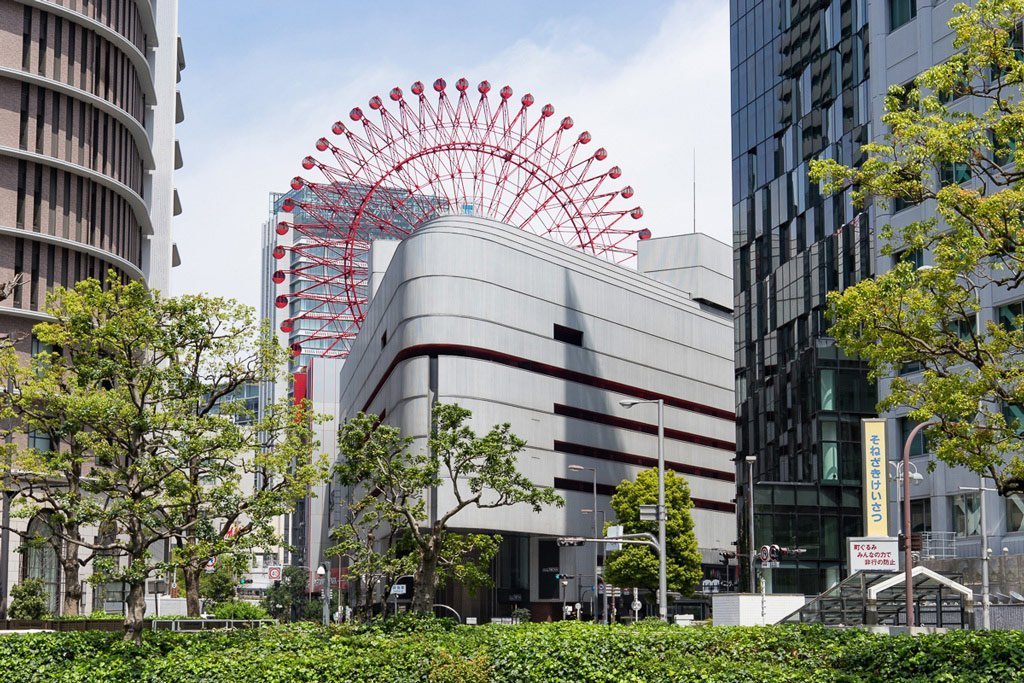
A Ferris wheel on the roof of a shopping mall, what kind of place has something that crazy? Japan, of course – or Osaka to be more precise.
There’s a red Ferris wheel on top of the Hep Five Shopping Mall in downtown Osaka that will take you as high as 106 meters. The ride is definitely worthwhile and is a real adrenaline rush for anyone with a fear of heights. The Ferris wheel turns very slowly, giving you enough time to take some great photos of the city.
Umeda Sky Building
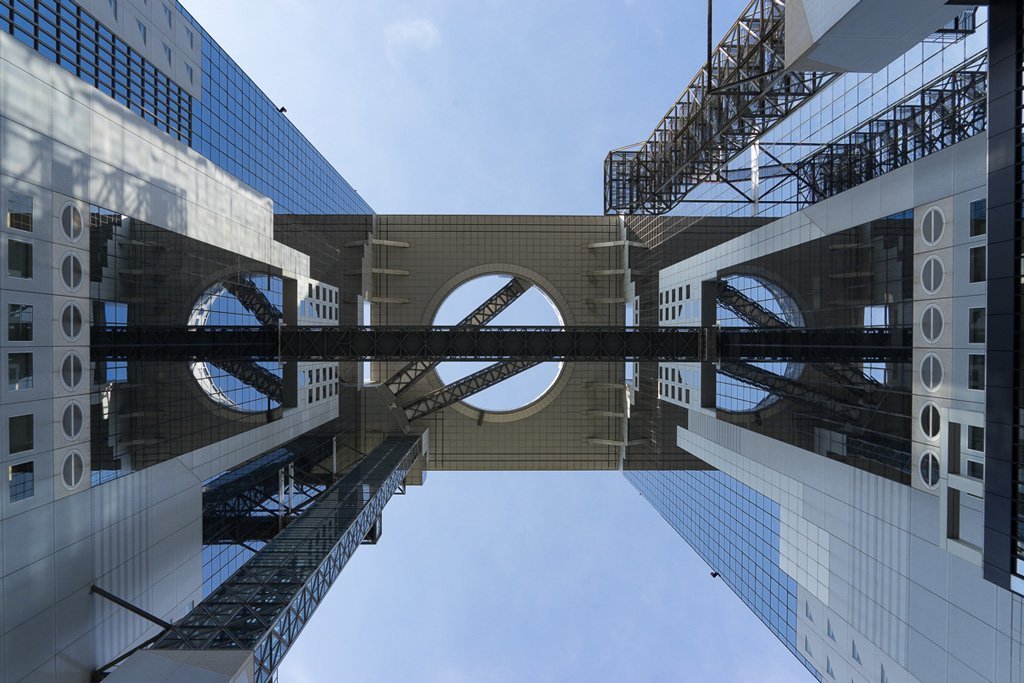
The Umeda Sky Building isn’t the prettiest building around, but it’s certainly special. It consists of two towers connected at the top by an observation deck.
To visit the observation deck, you have to take an escalator connecting the two towers at a height of over 150 meters. We can’t remember even having been on a more spectacular escalator.
At the top, you’ll be treated to a fantastic view of Osaka. There are two observation platforms – the upper one is outdoors and has no glass panels to obstruct the view. The top of the building offers a fantastic view of Osaka, especially at sunset! Unfortunately, this means it gets pretty crowded in the evening, so brace yourself for long lines at the elevators.
There’s also a 1930s retro-style food court in the basement of the building.
Osaka Castle
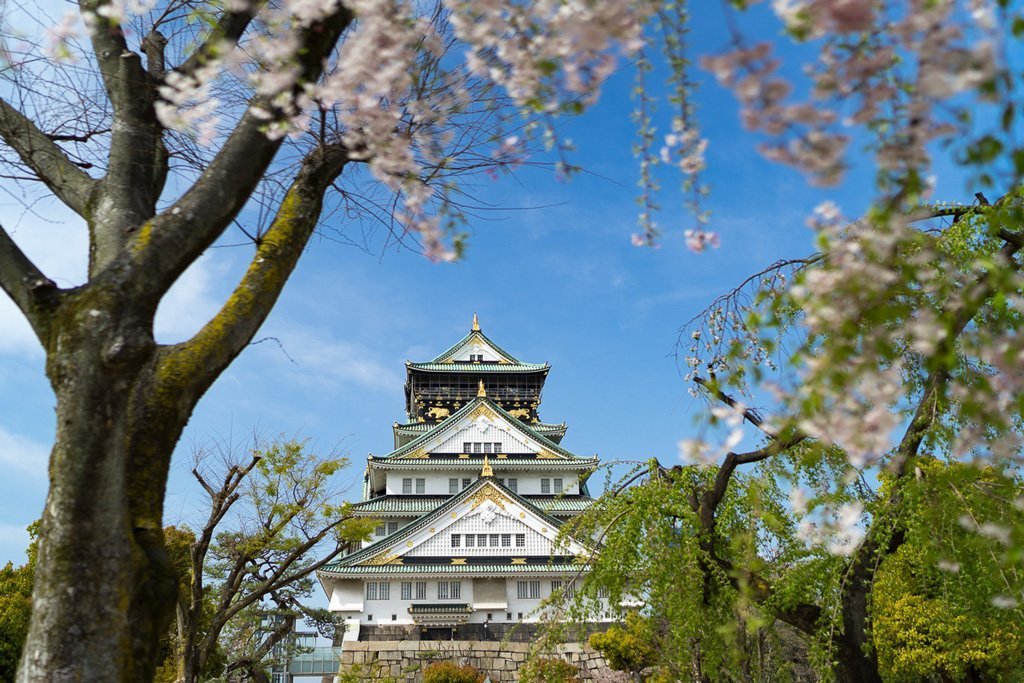
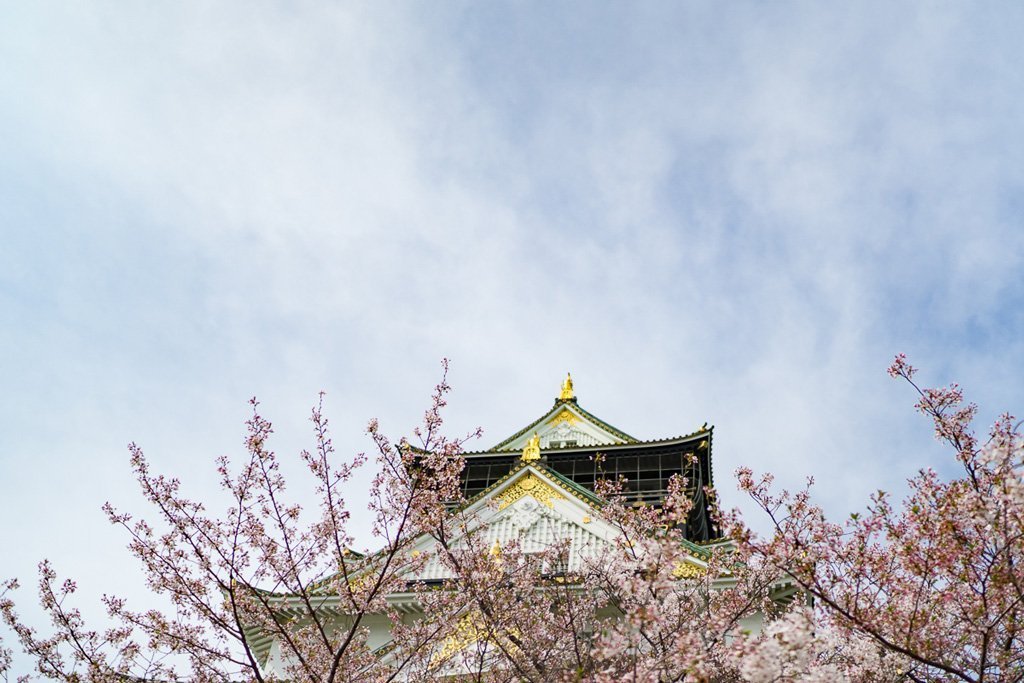
Standing in a vast park, surrounded by fortress walls, the eight-story central building of Osaka Castle is a real highlight.
The original castle was built in 1583, but was destroyed several times over the years. After the castle was destroyed once again in the World War II, it took until 1997 for the castle to be rebuilt.
The castle has a museum and a viewing platform on the 8th floor, but we gave it a miss this time. The castle grounds are free for visitors, only the building itself and a garden next to the castle charge admission.
Castle: 600 yen (4,60 euros)
Shinsekai
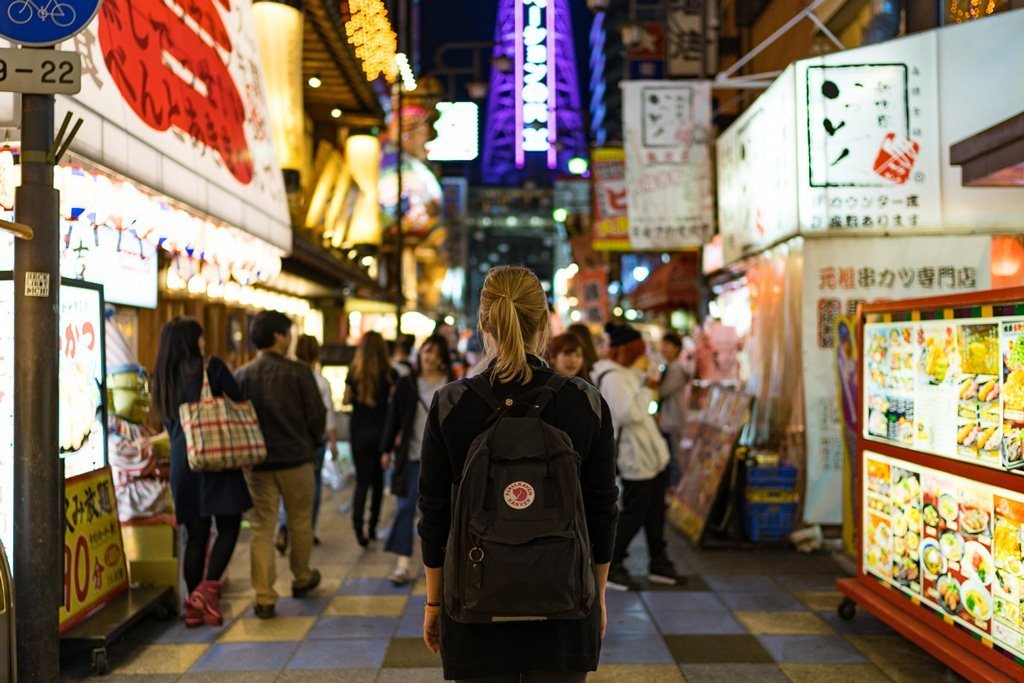
Shinsekai was our absolute highlight in Osaka. Shinsekai was originally designed as an amusement district in 1912, but soon fell into a state of neglect.
Today, the district is widely regarded as the most dangerous area in Osaka. The first thing that caught our eye was a sign that read: “Please beware of drunken transsexuals”. No joke! It was posted on a streetlight.
We actually did see some drunks and also some trans people in Shinsekai, and many of the people there really didn’t look at all like the polite and friendly Japanese people you’d expect to meet anywhere else in the country.
We can’t say for sure if it’s really dangerous. We certainly didn’t feel unsafe. The vibe and the people actually reminded us of a typical night out in Berlin. It almost felt a bit like home, but that might not be everyone’s cup of tea.
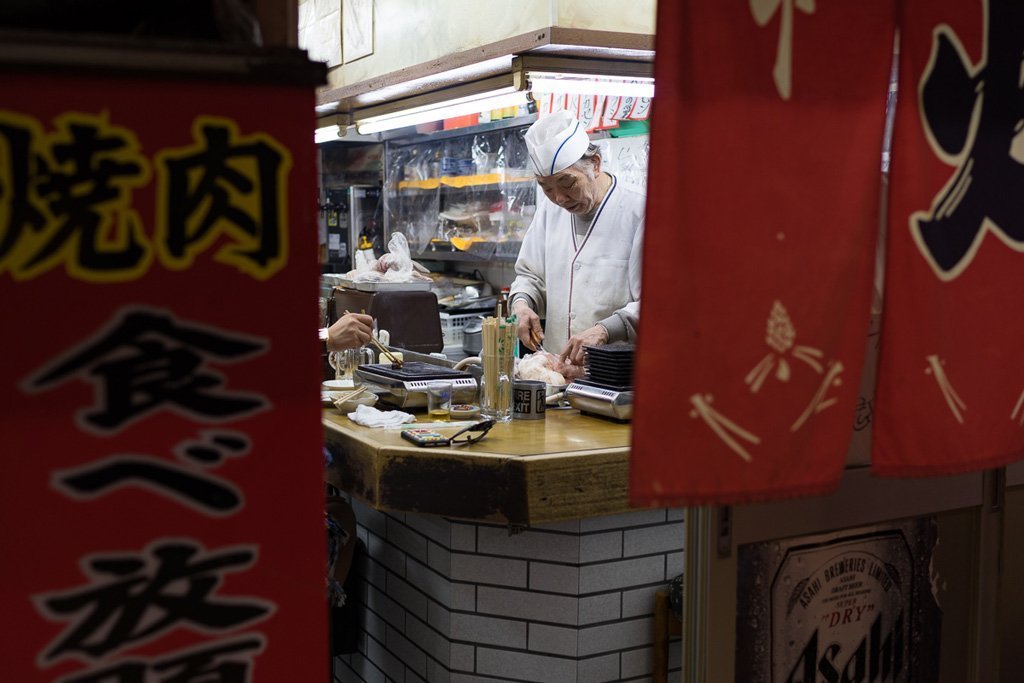
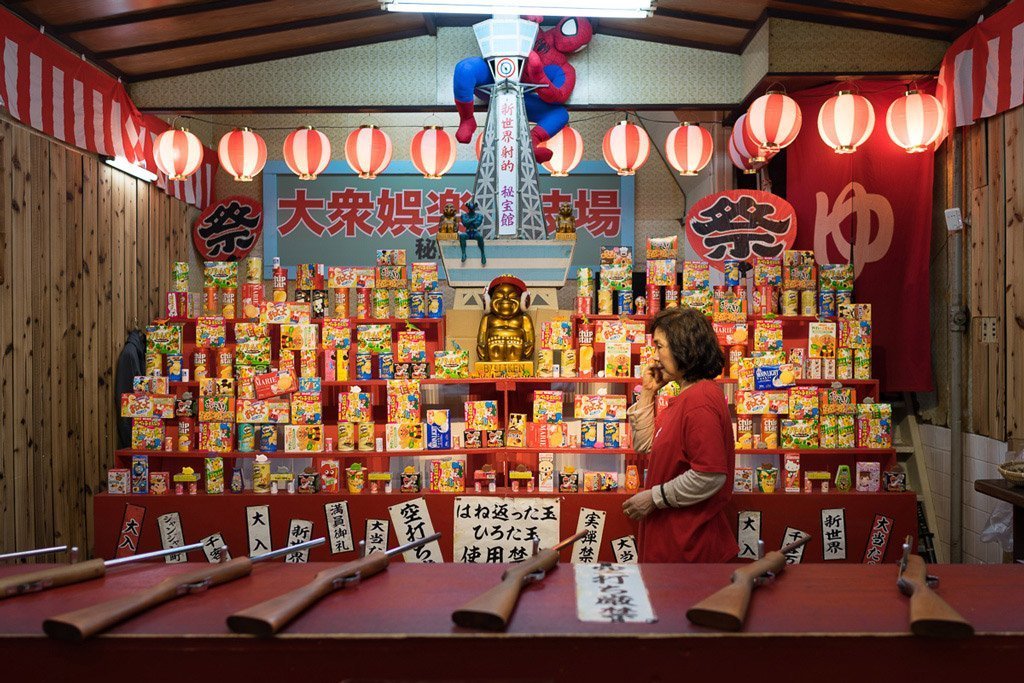
Besides a wide array of fascinating characters, Shinsekai also features a host of cool bars and restaurants, crazy shop windows, and seedy gambling dens.
Getting there: Dobutsen-mae (Midosuji Line, Sakaisuji Line), Shin-Imamiya (JR Osaka Loop Line)
Tsutenkaku Tower
Tsutenkaku Tower rises above Shinsekai and it’s is just as crazy as the neighborhood surrounding it.
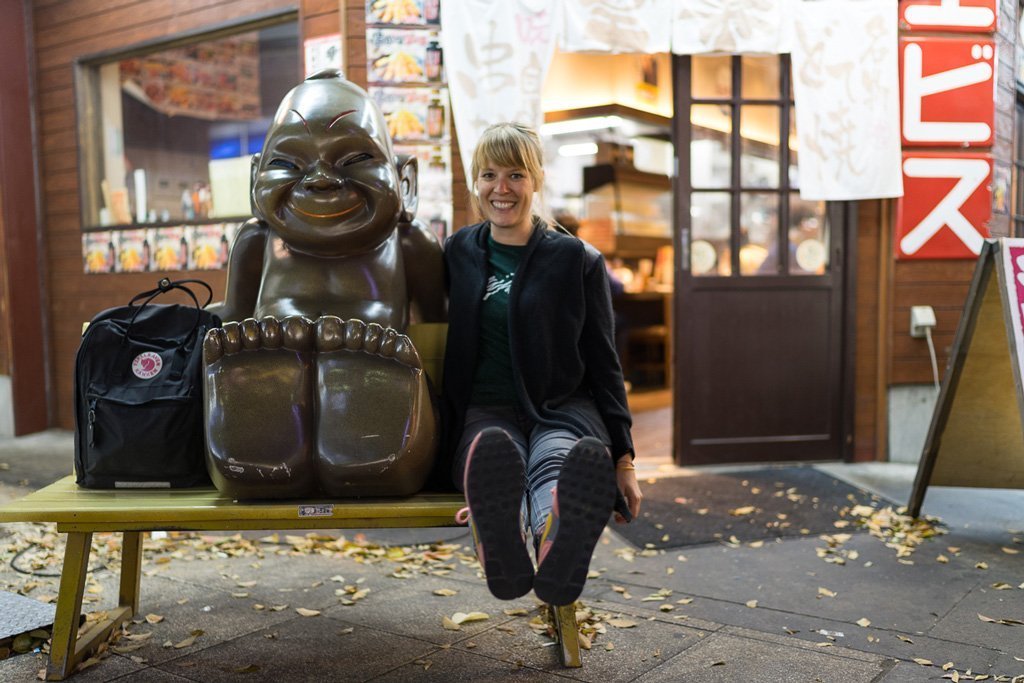
The observation deck is littered with little Billiken statues – a grinning, fat little man who is said to be a good luck charm. Fun fact: The Billiken was originally invented by an American artist in 1908.
This character has become so incredibly popular in Japan that there’s even a small shrine dedicated to him in Tsutenkaku. It’s also considered lucky to rub the Billiken’s feet. So of course we had to try that ourselves!
The tower has two observation decks, one on the inside and one on the outside. Unfortunately, the outer deck already closes at 7 p.m., so we had to make do with the indoor one.
The view isn’t as spectacular as from the Umeda Sky Building, but the tower’s still worth visiting just for the sheer absurdity of the experience.
700 yen (5,40 euros)
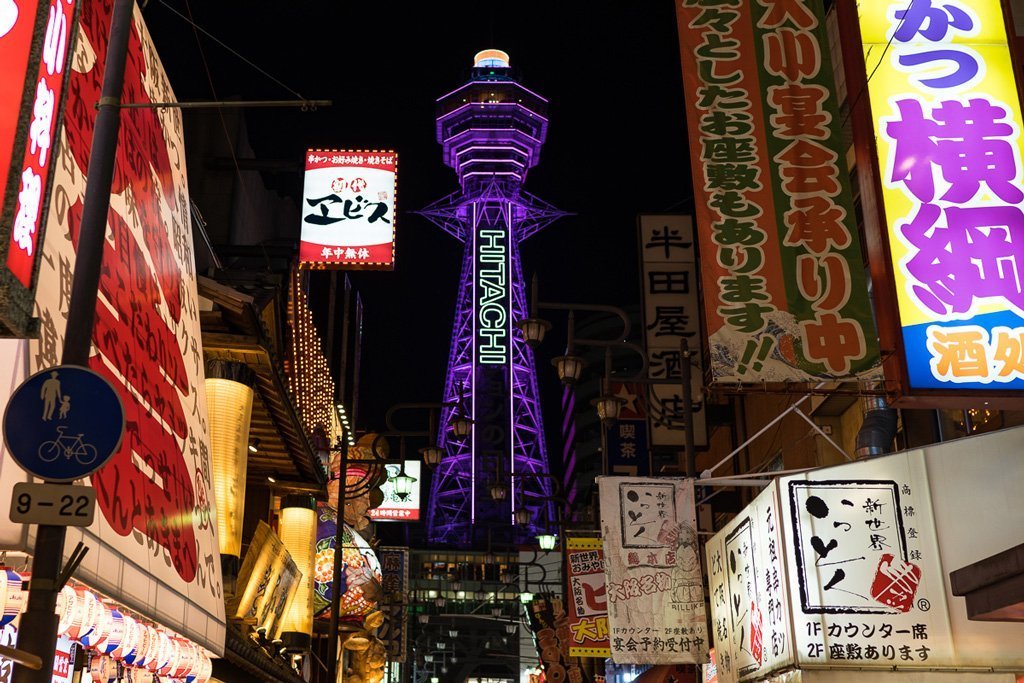
Minami: Osaka’s nightlife district
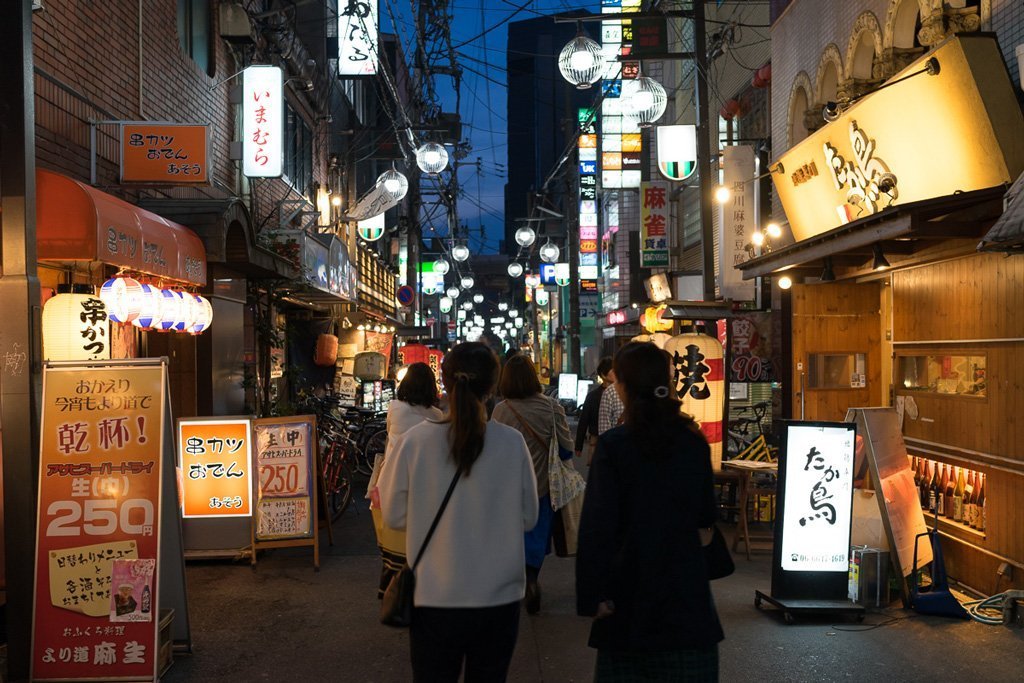
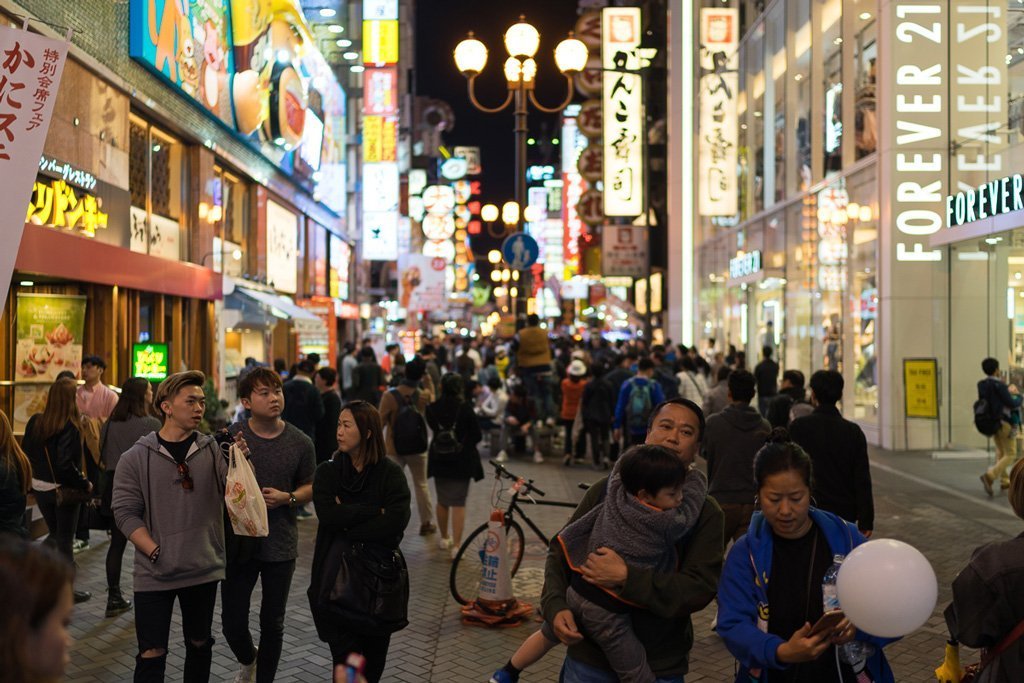
Minami is the nightlife and entertainment district in Osaka and especially worth visiting in the evening when the huge neon signs on the building facades light up.
One of the most important streets in Minami is Dotonbori, which runs parallel to the canal.
Shinsaibashi-suji Shopping Arcade, a 600-meter covered shopping street, and Amerika-mura – the American Village – are also worth visiting.
Amerikamura has smaller boutique stores rather than big chains, and also features many restaurants and bars.
Getting there: Namba (Midosuji Line, Yotsubashi Line, Sen-Nichimae Line), Shinsaibashi (Misuji Line, Nagahori Tsurumi-ryokuchi Line), Yotsubashi (Yotsubashi Line)
Recommended city tours through Osaka
If you’d like to explore Osaka with an insider, we recommend booking a tour online. There are several interesting city tours for Osaka, from classic to extraordinary:
Osaka’s top spots and hidden places: This tour will take you to some well-known and some hidden corners of Osaka, including the cool neighborhoods of Namba and Dotonbori.
Osaka off the beaten track: You will get to know Osaka from its honest, unfiltered side. You’ll walk through exciting backyards and winding alleys and also discover darker areas of the city.
Osaka Street Food Tour: The best way to really experience a place is by sampling the local food, and Osaka really has a lot to offer in that regard. This street food tour is the perfect opportunity to sample your way through the Japanese cuisine and get lots of information to boot.
How much time do you need for Osaka?
The sights in Osaka featured in this post can all be done in one day. We spent a total of three days in Osaka, as the city is also a great starting point for day trips to the surrounding area.
If you don’t want to stay the night there, you could easily go on a day trip to Osaka from Kyoto. It only takes 15 minutes to get from one city to the other on the shinkansen, or about 30 to 45 minutes with other trains.
Day trips from Osaka to the surrounding area
As we mentioned above, Osaka is a good place to start a day trip to the surrounding area.
The historic temples of Nara are one of the highlights of a trip to Japan. You can get there by train from Osaka in just over half an hour.
Other interesting day trips include the mountains of Koyssan (2-hour journey), Himeiji Castle (1-hour journey), and Kobe (1-hour journey), where you can sample the legendary Kobe beef.
It’s even possible to get to Hiroshima in just under 2 hours from Osaka as part of a day trip. If you haven’t got much time and can’t fit in a full visit, a day trip from Osaka is a great alternative.
Where to stay in Osaka
Room rates in Osaka aren’t quite as high as in Tokyo, but they aren’t exactly cheap either.
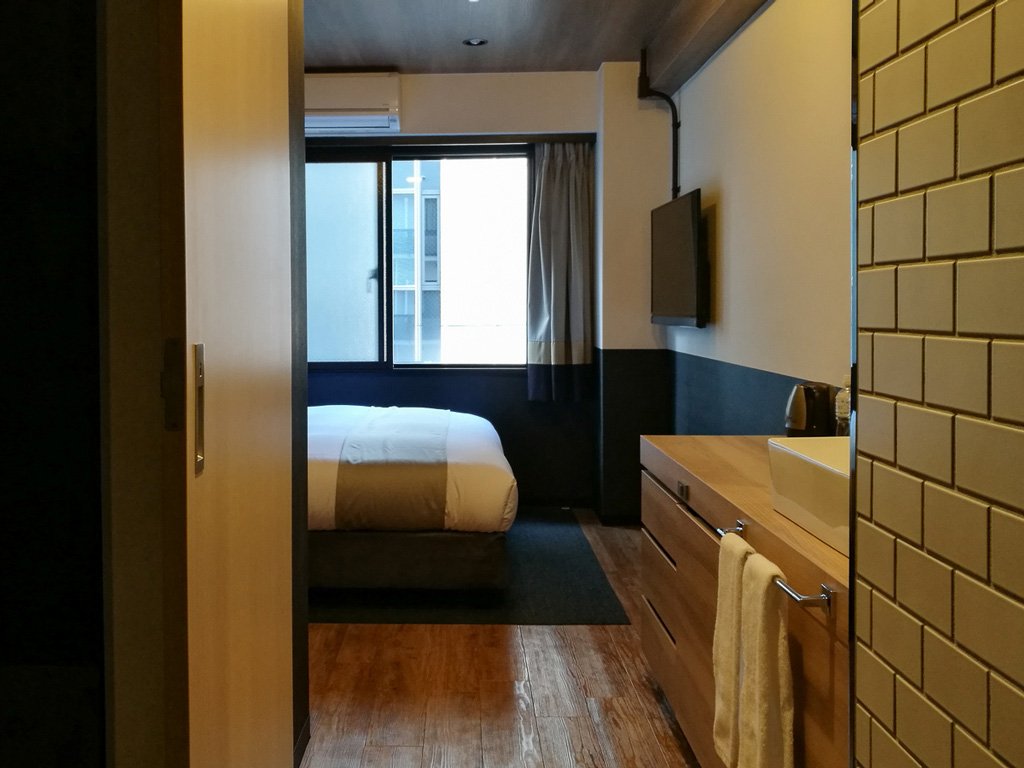
We stayed at the Hotel Cordia Osaka and can definitely recommend it. The hotel is new, has modern rooms, very comfortable beds, and a great location.
The metro stop Higobashi is right next door. To get to Osaka Station, you have to take the subway for one stop to Namba Station, change trains, and then it’s just three more stops from there.
If you’d like to splurge on luxury accommodation, we’d recommend the Intercontinental Hotel Osaka, right next to the central station.
Or if you’re on a budget, there are several hostels in Osaka that provide both private rooms and dorm beds. We’d recommend the Picnic Hostel and the Hostel Sakura La An.
For a full list of all the hotels we stayed at in Japan, check out our post:
A list of our hotels in Japan & 7 hotel booking tips.
Osaka: Subway and public transport
Osaka’s downtown area is much more compact than in Tokyo. Almost all the major sights are within 3 to 5 subway stops of one another. A single journey costs 180 yen, with surcharges for longer journeys.
It’s a good idea to purchase a prepaid card at one of the larger ATM stations. You can top up the card at any station.
If you’re coming from Tokyo, you can also use your Suica Card in Osaka. That’s super-convenient!
Just like in Tokyo, Osaka has a circle line that runs once around the extended downtown area. The Osaka Loop Line is operated by JR and is included in the JR Rail Pass.
For the subway, you can also buy a day pass at special machines at the major stations. It costs 600 yen on weekends (worth it for 4 trips or more) and 800 yen during the week (worth it for 5-6 trips or more).
Subways run every day from about 5 a.m. to shortly before midnight. The departures board at every station will tell you what time the last train leaves.
Our restaurant tips for Osaka
We dined at some really delicious restaurants in Osaka, and we’d like to share some of our favorite recommendations. Compared to Tokyo, smoking is allowed (and heavily practiced) in a lot more restaurants in Osaka. It can be difficult to find a smoke-free place to eat – but we’ve got you covered! All our dining tips are suitable for non-smokers.
Utogaria
The tiny restaurant Utogaria was very close to our hotel. The owner spent a few years living abroad and speaks excellent English. It features some delicious tapas-sized creations from Japanese cuisine. We tried 5 different dishes, all of them very tasty.
Closed on Sundays
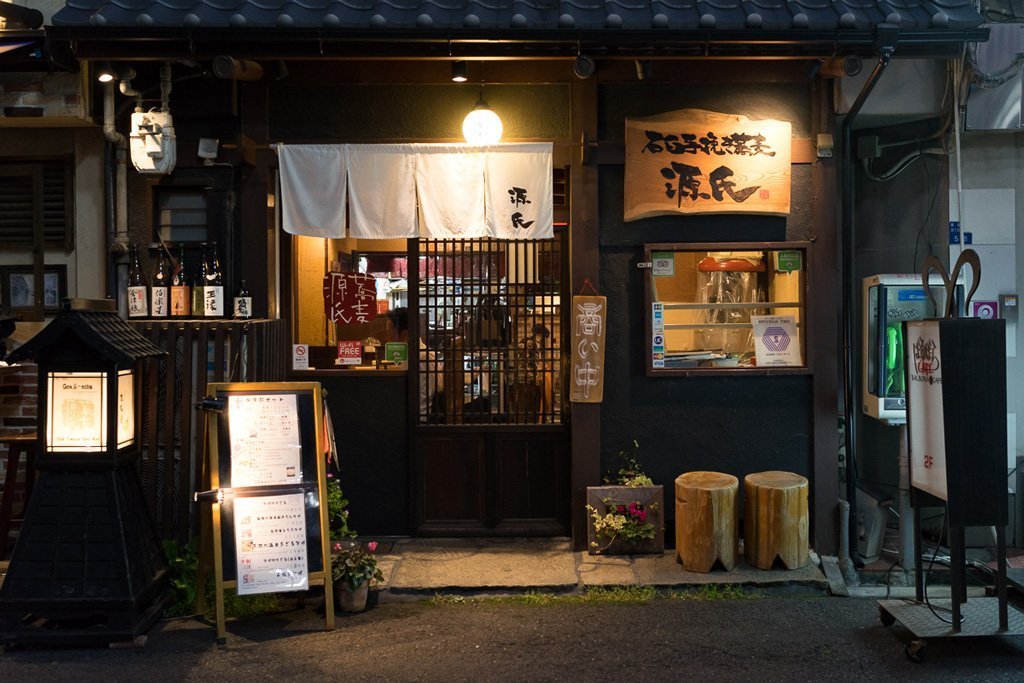
Genji-soba
The small Genji-soba eatery serves super-delicious soba. Soba are thin, brown noodles made from buckwheat, which you either eat as a soup or as a cold dish.
We had a soup and a mountain of cold pasta with horseradish and dipping sauce. It sounds really basic, but it’s surprisingly delicious.
If you drop by, check out our guestbook and flip through the pages to April 15, 2017, where you should find our entry and a picture of us taken by the owner. We’d be thrilled if you could take a photo of our entry!
closed on Thursday
回転寿司 Kaiten Sushi
Conveyor belt sushi, known as kaiten-zushi in Japan, is probably the cheapest way to eat sushi. The sushi creations pass you by on a conveyor belt – and you can either pick one of the standard sushi options or place a custom order via a tablet, which is prepared specially for you and then placed on the belt for you to pick up.
The quality is good and the prices are incredibly reasonable. Each plate costs 108 yen. That means two of you can eat sushi to your heart’s content and still walk away with a bill of less than 20 euros.
The restaurants are very popular among the locals, too, so waiting times of 20 minutes to over an hour aren’t rare at peak times. But it’s much faster if you stop by outside the typical dinner times.
Most kaiten sushi places don’t have an English name. However, they’re easy to spot – just keep an eye out for these four symbols: 回転寿司. There are countless kaiten sushi places all over Osaka, but if you want to follow in our footsteps, then check the info box below for the address.
Even more tips for Japan and Osaka
Have you been to Osaka and have a great tip for us? Then please let us know! We look forward to your tips and feedback in the comment section below.