
Japan Travel Tips: Everything You Need to Know + 3 Weeks Itinerary
Latest update: July 20, 2023
Japan! The country was at the top of our list for a long time until we finally took the plunge and traveled to Japan. Right off the bat: Japan is absolutely great, unique, crazy, and special!
Japan is also pretty challenging, which we noticed while planning our trip and once we got there. And that’s exactly why we wrote this post.
It contains all our Japan travel tips that are useful before and during your trip.
Since the post is packed to the brim with everything you need to know about traveling to Japan, we’ve structured it into three large parts and put a table of contents to the beginning.
That way, you can easily jump to the Japan travel tips that interest you most or just read the entire article top to bottom.
We wish you a lot of fun planning your trip to Japan and an exciting stay!
Read all our posts about Japan
Japan travel planning
If you aren’t sure if Japan is the right place for you, the first part of this post is just for you.
Who is Japan perfect for as a destination?
Japan is definitely a destination that isn’t that popular yet in Europe So if you’re looking for an extraordinary destination for your next vacation, then you should add Japan to your list.
But what does Japan have to offer? In Japan you’ll find huge cities, especially Tokyo, one of the most exciting metropolises in the world. Although Japan is a very modern country, it has great cultural treasures and temples to offer, and nature lovers will also find a lot to do in Japan. How about a hike up the famous Mount Fuji, for example? Or maybe even a skiing vacation? Japan has it all.
And even if you need sun and beach on your vacation, then you’ll also find the right spot for that in Japan. Okinawa Prefecture in the south of Japan has some amazing islands and beaches that are in no way inferior to the well-known beach destinations in Southeast Asia.
Long story short: Japan is incredibly diverse. Whether you’re a city slicker, nature lover, or beachcomber. Everyone will find what they’re looking for in Japan.
Japan is also a country that’s easy to travel on your own. Traveling solo through Japan is very convenient on the one hand, because the infrastructure is excellent, but on the other hand it’s also a bit of an adventure, because hardly anyone speaks English and it’s not that easy to look up the Japanese characters in a travel dictionary.
Moreover, Japan isn’t a very cheap destination. Although it’s quite possible to travel through Japan on a relatively small budget, generally speaking, Japan is an expensive country to visit.
When’s the best time to travel to Japan?
In principle, you can travel to Japan all year round. Since the country extends from north to south over several thousand kilometers, there are also many different climate zones in Japan. The islands in the south around Okinawa have a subtropical climate, while the northern parts of the country border directly on Siberia, so it can get freezing cold there.
Many tourists traveling to Japan for the first time visit the main island of Honshu. It’s home to the famous destinations of Tokyo, Kyoto, Hiroshima, Osaka, and Mount Fuji.
It’s hot and rainy on the main island in summer while the winters are rather unpleasant, similar to central Europe. The best weather is in spring and autumn. The temperatures are the most pleasant then – not too hot and not too cold – and there’s less rainfall overall.
Of course, that’s when most tourists come to visit. It’s often very crowded around the main sights and room rates are much higher than in the low season.
Many travelers come to Japan for the cherry blossom season. It usually only lasts for about 10 days and migrates from south to north. The cherry blossom is never entirely predictable. During our visit to Japan, for example, it was unusually late. As a rule, cherries bloom between the end of March and the middle of April.
You should avoid the Golden Week at all costs. Between April 29 and May 5 (or May 6, if the 5th falls on a Sunday), there are four public holidays in Japan. Many Japanese people get the entire time off, some companies even close down.
Since Japanese people like to travel a lot in their own country, hotels, trains, and flights are likely to be fully booked and are often disproportionately expensive. If you can help it, try to avoid the Golden Week.
How much time should you plan for Japan?
Since the flight to Japan is relatively long, it’s worth staying in Japan for a bit longer.
To visit the main attractions on the main island of Honshu, you’ll need at least two weeks. But then you’ll be on a very tight schedule with little time to relax and explore.
Therefore, we’d recommend staying three weeks. The more time you have, the better. But three weeks are a very good start.
Getting there: Cheap flights to Japan
From Germany, Lufthansa, and All Nippon Airways offer direct flights from Düsseldorf, Munich and Frankfurt to Tokyo. There are also flights to Osaka from Frankfurt. The flight takes about 12 hours. From Switzerland, there are direct connections between Zurich and Tokyo.
Direct flights are usually more expensive than flights with a transfer. It’s worth comparing prices. Cheap connections are often available with Finnair via Helsinki, with LOT via Warsaw, with Emirates via Dubai, and with Qatar Airways via Doha.
You’ll just have to decide whether a longer flight is worth it at a much cheaper price. We always use the flight search engine Skyscanner to find the best flight for us.
Entry requirements for Japan
You’ll need a valid passport for your trip to Japan. As a tourist, you’ll be given a stamp in your passport when you enter the country, allowing you to stay for 90 days. If this isn’t enough, you can extend your stay by another 90 days.
On the plane you’ll be given a short form, which you have to fill out and hand in at the passport control. Among other things, you’ll have to enter an address in Japan. You can simply enter the address of your first hotel in Tokyo for example.
Officially, you have to have your passport on you at all times. We’ve never heard of anyone being checked, but better be safe than sorry.
What do I have to pack for a trip to Japan?
Depending on the season, you should obviously pack appropriate clothes. In the summer, short clothes and a thin jacket are enough, while you should wrap up warm in the winter.
Things are a bit more complicated in spring and fall. During our visit in April, there were days when we only needed a T-shirt, and on other days we had to wear our thick winter jackets, especially in the evening. So you should be prepared for any weather if you travel then.
Another important thing is a power adapter for Japan. Unfortunately, our universal adapter that worked everywhere else so far didn’t have the right connector for Japan. But you can buy the right adapter in a triple pack at a low price here.
The voltage standard in Japan is 110 volts. Make sure that all your technical devices you want to bring will work with this voltage. This is pretty much always the case with modern equipment, but it can’t hurt to check. There’s always a voltage rating printed on each power plug.
We also recommend bringing all your own cosmetics and toiletries. In theory, you could just as easily buy them in Japan, but the product descriptions are mostly printed in Japanese. That might be OK for toothpaste, but things get a bit trickier when it comes to creams. Because they often contain whitener in Asia.
Clothing and technical equipment are readily available in local stores if you’ve forgotten something at home.
To get from A to B within Japan, we recommend the Japan Rail Pass. With this pass, you can use almost all the state-operated trains in Japan, which will usually save you a lot of money compared with buying tickets individually. However, you have to order the Japan Rail pass before your trip, as you can’t buy it in Japan. You can order it online here.
Read about our experience with the Japan Rail Pass here.
Vaccinations and travel health kit for Japan
You don’t need any special vaccinations for Japan. The standard vaccinations for Europe or North America should do just fine. An additional vaccination against hepatitis B and Japanese encephalitis is recommended only for long-term stays.
You can generally get all common drugs in Japan. Pharmacies are usually directly integrated into drugstores. But then there’s the problem of communication. Packages and package inserts are often printed exclusively in Japanese and you can’t always be sure that the pharmacist speaks English. So a small supply of diarrhea medication and painkillers can’t hurt.
If you catch a cold in Japan, we have a real insider tip for you.
Japanese people swear by a remedy called 粉薬 (Konagusuri). The powder needs to be dissolved in water three times a day. It tastes absolutely disgusting, but it really helps. Of course we tried it for ourselves. You can buy this miracle cure in most supermarkets.
3-week itinerary for Japan
There are so many great places and sights to discover that you don’t really know where to start. We were the same way. It was our very first time in Japan and we had to find our bearings first. Where are Tokyo and Kyoto on the map? We’ve collected all our accumulated knowledge here to help with your planning.
Our travel route for Japan
It’s often difficult to get your bearings when you travel to a country for the first time. To help you out, we’ve traced our travel route on a map for you.
The 3-week itinerary:
- 10 days – Tokyo including a day trip to Kamakura & Yokohama
- 3 days – Osaka including a day trip to Nara
- 6 days – Kyoto
- 1 day – Hiroshima + 1 day – Miyajima
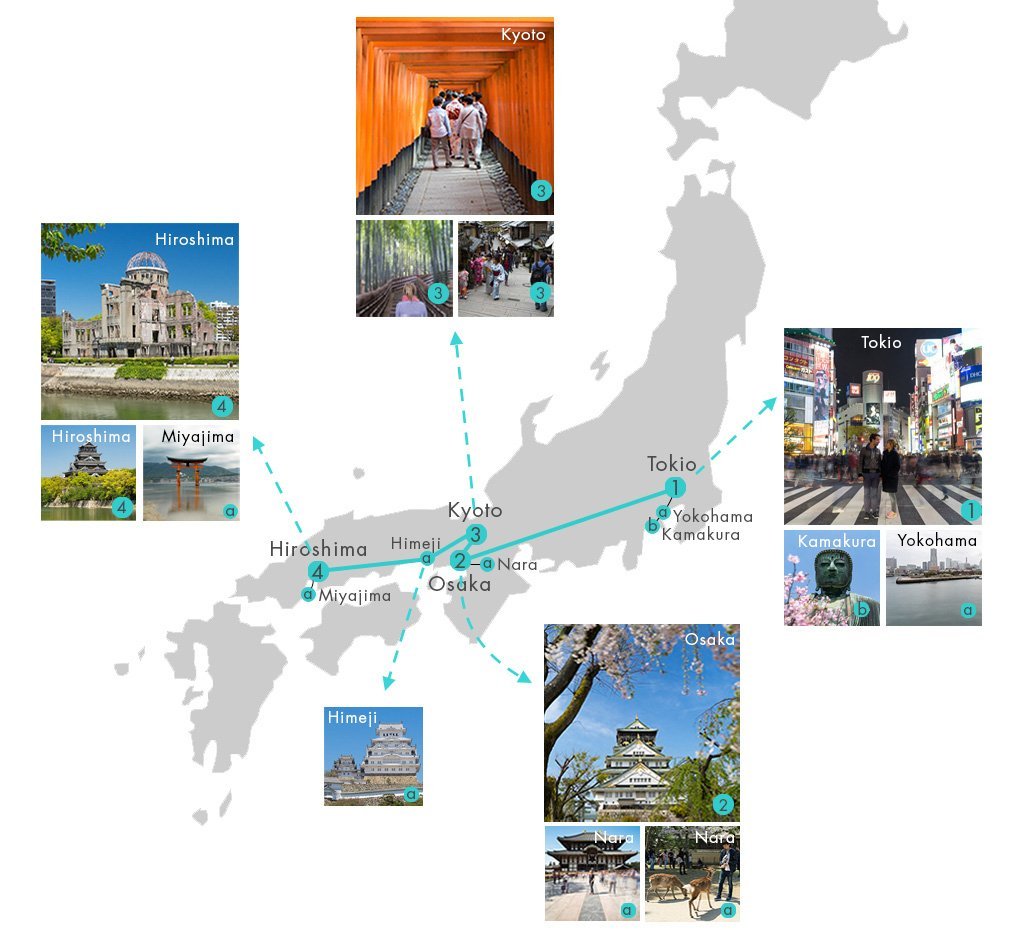
How our route held up in hindsight
The Japan route we picked is an excellent route for beginners. In hindsight, we’re definitely satisfied with our selection of destinations and places of interest and can wholeheartedly recommend it.
Our Tip: If you have two more days to spare, we’d recommend a one- or two-day stay at the foot of Mount Fuji. We’ve heard many good things about the Kagelow Mount Fuji Hostel. They also have private double rooms and some rooms have a direct view of Mount Fuji.
Alternatively, you could also go on a day trip there from Tokyo.
Reduce the itinerary to two weeks
There are probably some people who don’t have three weeks to spare. If we had only had two weeks, we would have reduced our itinerary a bit. Like so:
The 2-week itinerary:
- 5 days – Tokyo (optionally: day trip to Kamakura & Yokohama & day trip to Mount Fuji)
- 2 days – Osaka including a day trip to Nara
- 4 days – Kyoto
- 2 days – Hiroshima including a day trip to Miyajima
Getting around in Japan
We ordered a two-week Japan Rail Pass before our trip. We did every journey, i.e. from Tokyo to Osaka, Osaka to Kyoto, Kyoto to Hiroshima, Hiroshima to Miyajima. and from there back to Tokyo with the Rail Pass.
That’s definitely the easiest and fastest way of getting around the country, but it isn’t all that cheap. But that isn’t the only reason the Japan Rail Pass is worthwhile, because it also allows you to travel incredibly flexibly and spontaneously.
But please note: You can only buy the Rail Pass in your home country, i.e. BEFORE your trip to Japan.
Sights and attractions in Japan
Of course there’s no way we can list all the sights in Japan in this post. The country is much too large and too diverse for that. So we’ve limited ourselves to the highlights on the main island of Honshu, because it has more than enough to offer for first-time visitors to Japan.
Tokyo: Day 1 to 6
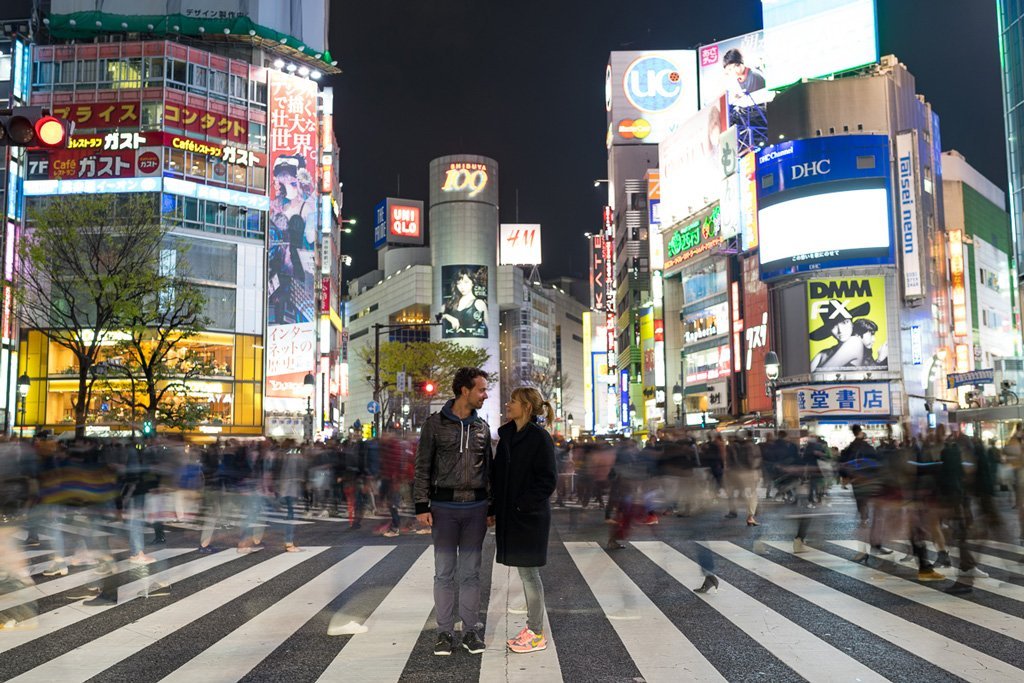
Most international flights land in Tokyo. The city is simply amazing and if you’re flying in from a more less high-strung country, you’ll experience a flood of stimuli.
Tokyo has great observation points, huge streets, and intersections with neon signs, some temples, beautiful parks and many crazy neighborhoods.
Also read our post about Tokyo
Day trips from Tokyo
There are two easy days trips to the area around Tokyo that we can recommend while you’re there.
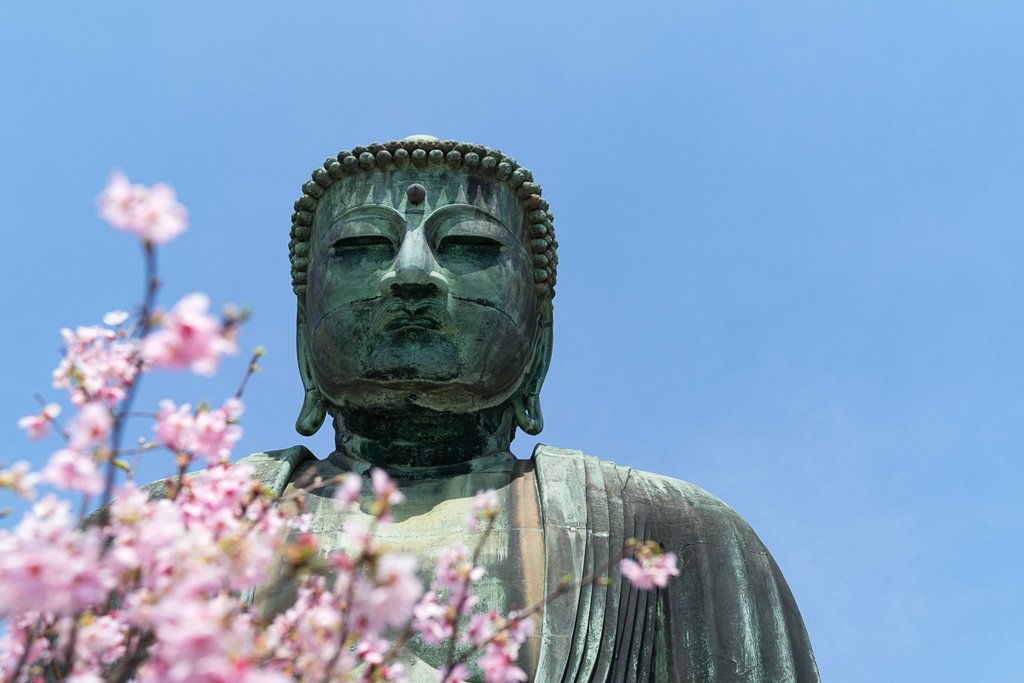
Kamakura and Nikko have some of the most important temples in Japan and it’s nice to get out of hectic Tokyo for a bit.
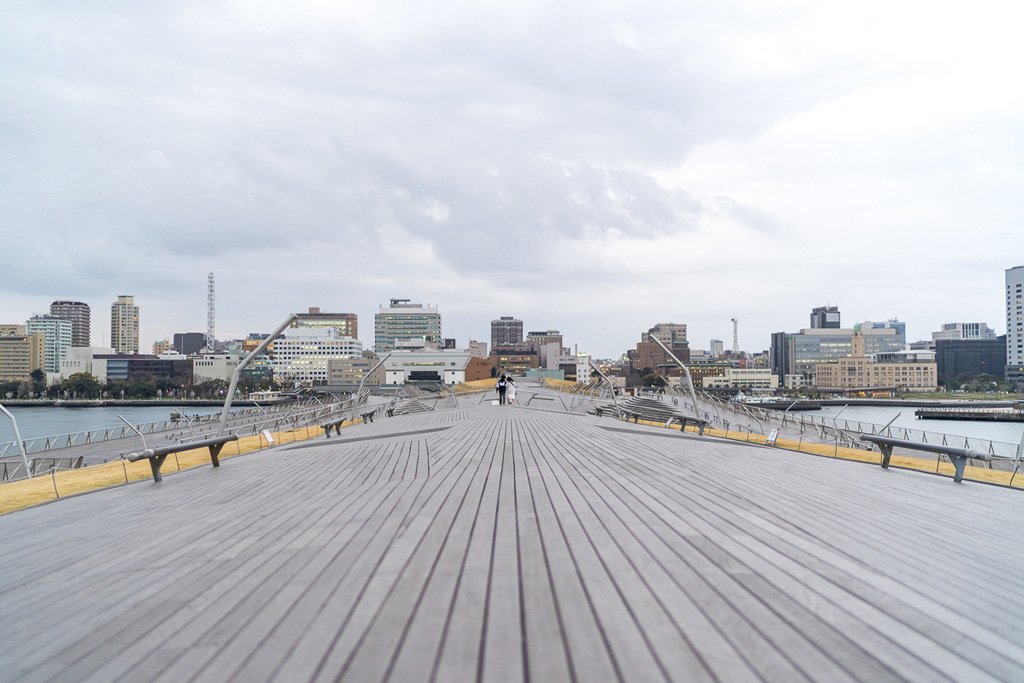
If you can’t get enough of big cities, we recommend a trip to Yokohama, Japan’s second-largest city, only 20 minutes away.
Osaka: Day 7 to 9
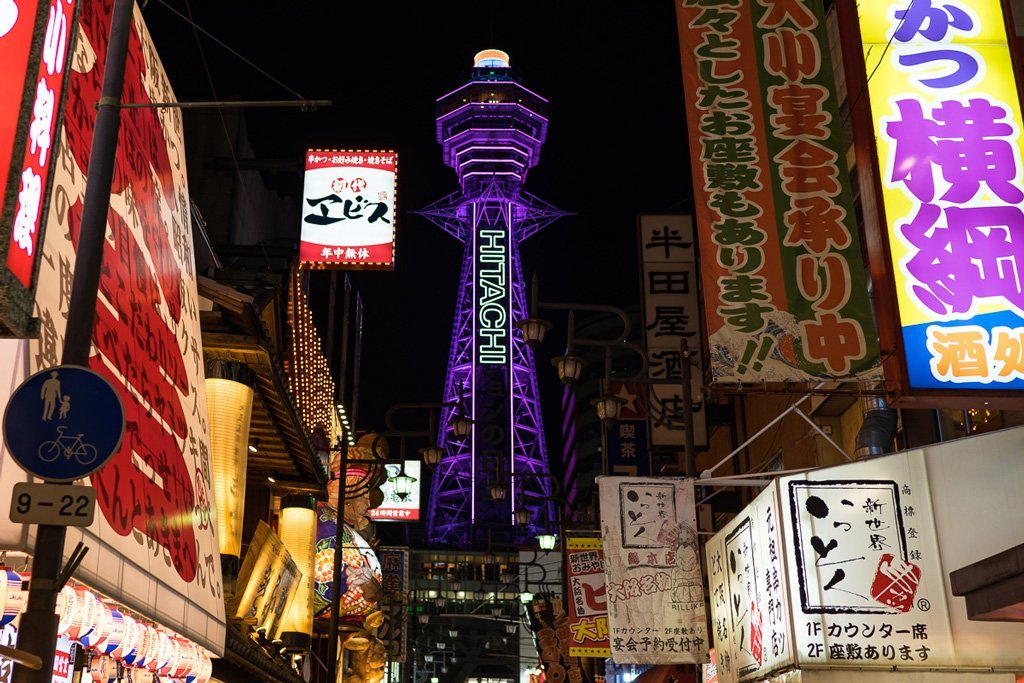
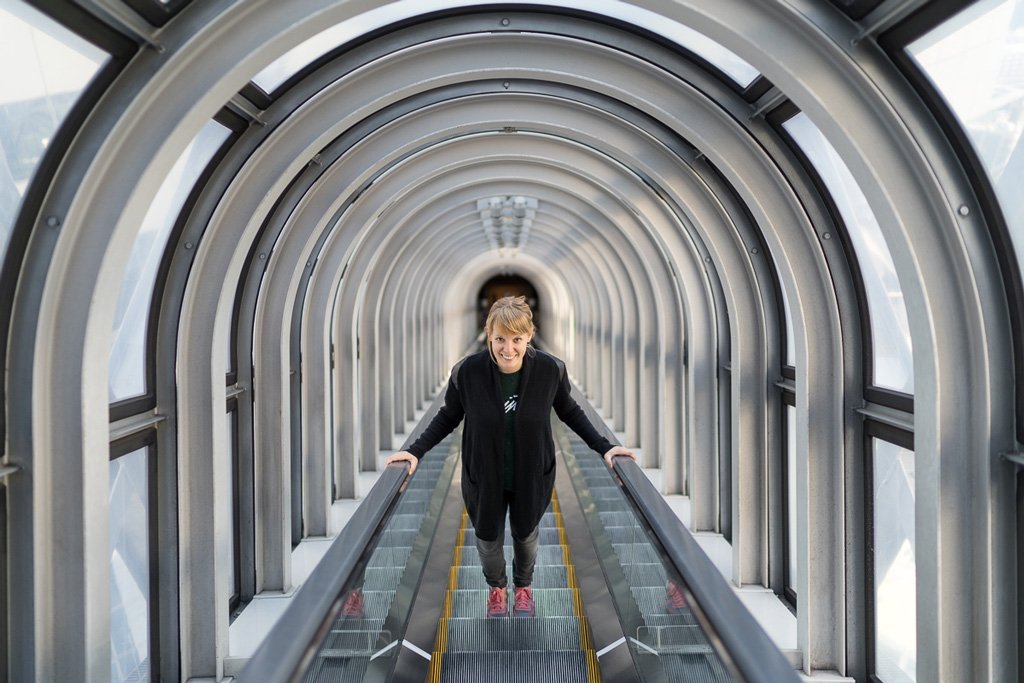
Osaka often flies under most travelers’ radar, which is a real shame. We liked the city very much and it has some extravagant sights to offer, such as one of the most beautiful escalators in the world, a crazy entertainment district, and a Ferris wheel on the roof of a shopping center.
Day trip from Osaka to Nara
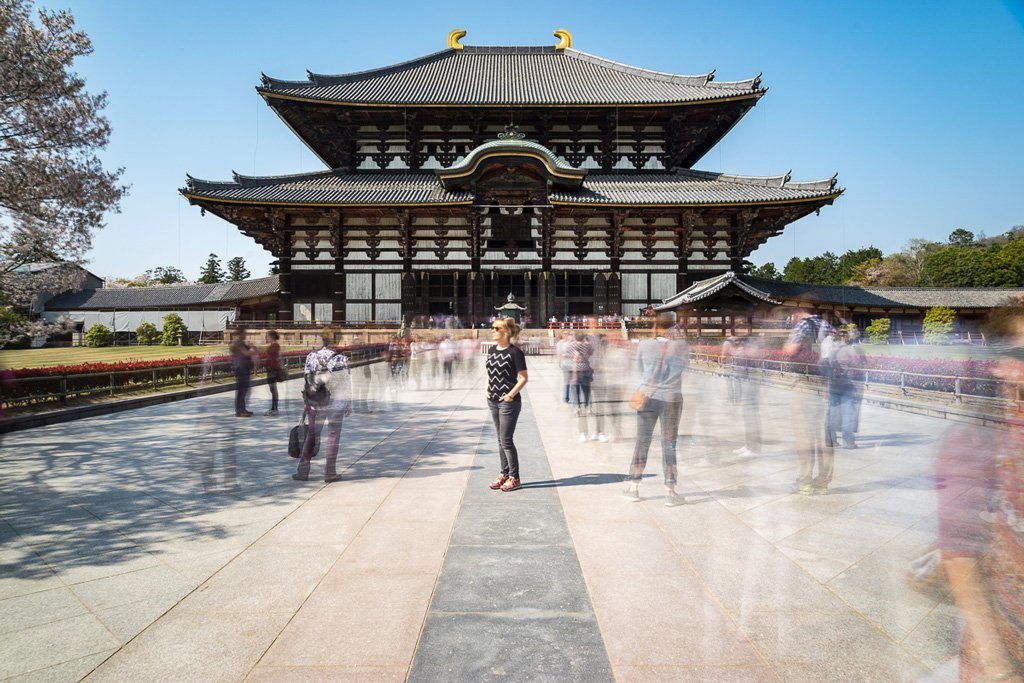
From Osaka you should definitely go on a day trip to Nara. The former capital is great for an extensive bout of temple-hopping.
If Osaka isn’t on your travel itinerary, you can also make the trip to Nara from Kyoto, or add Nara to your itinerary and stay overnight.
Kyoto: Day 10 to 15
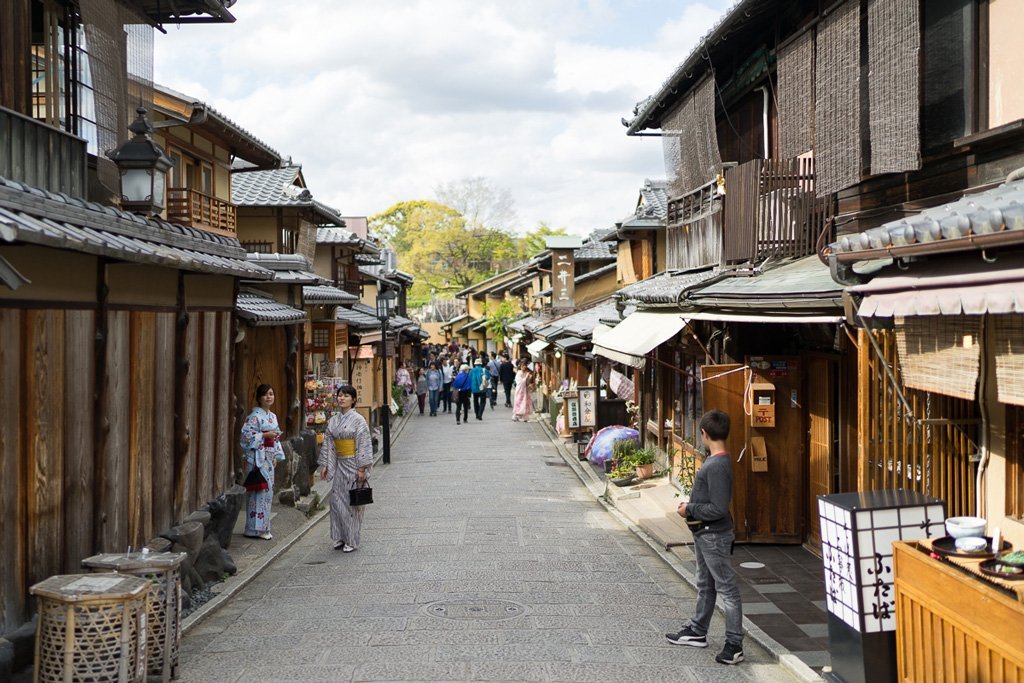
Kyoto is the cultural highlight in Japan. For centuries, Kyoto was the capital of Japan and today the city is probably THE tourist hotspot in the country. While thousands of tourists and bus groups push their way through some of the myriad temples, other temples are almost completely deserted and just waiting to be discovered.
You should plan four full days for Kyoto. Of course there’s a lot more to be seen than you could possibly do in four days, but after a while you’ll probably start to get a bit tired of temples. At least we did.
Also read our post about Kyoto
Hiroshima and Miyajima: Day 16 to 18
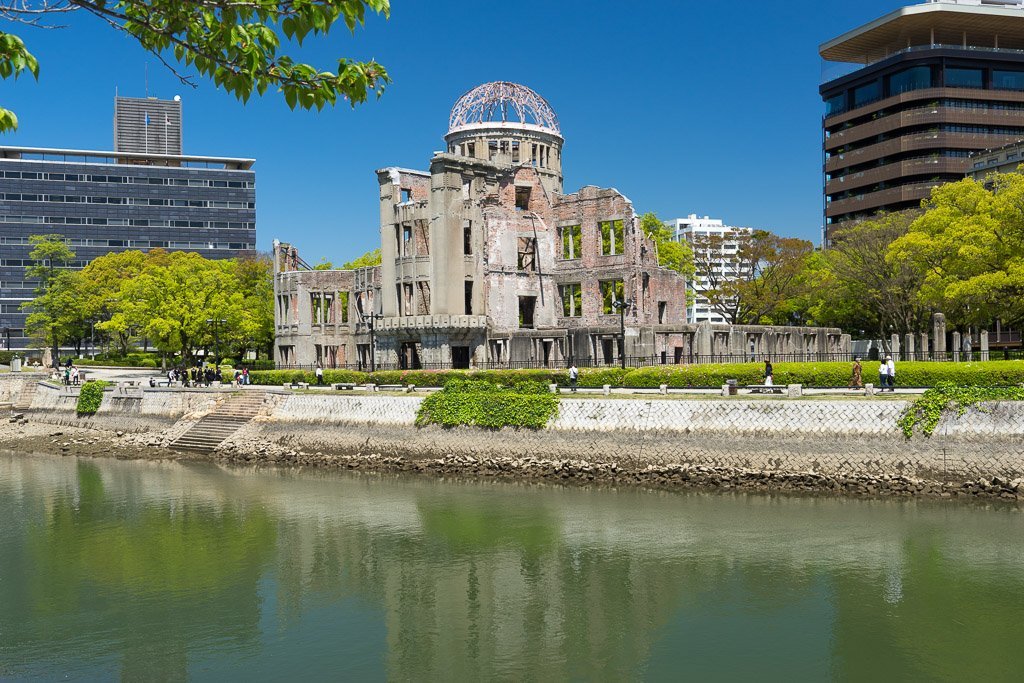
In the southwest of the main island lies Hiroshima, one of the most exciting cities in Japan. The tragic history of the city is commemorated in different memorial sites. Although it can get very depressing at times, we can highly recommend a visit to Hiroshima.
All in all, we liked the city very much: lots of young people, nice restaurants and shops, and much less hustle and bustle than in the other big cities we visited.
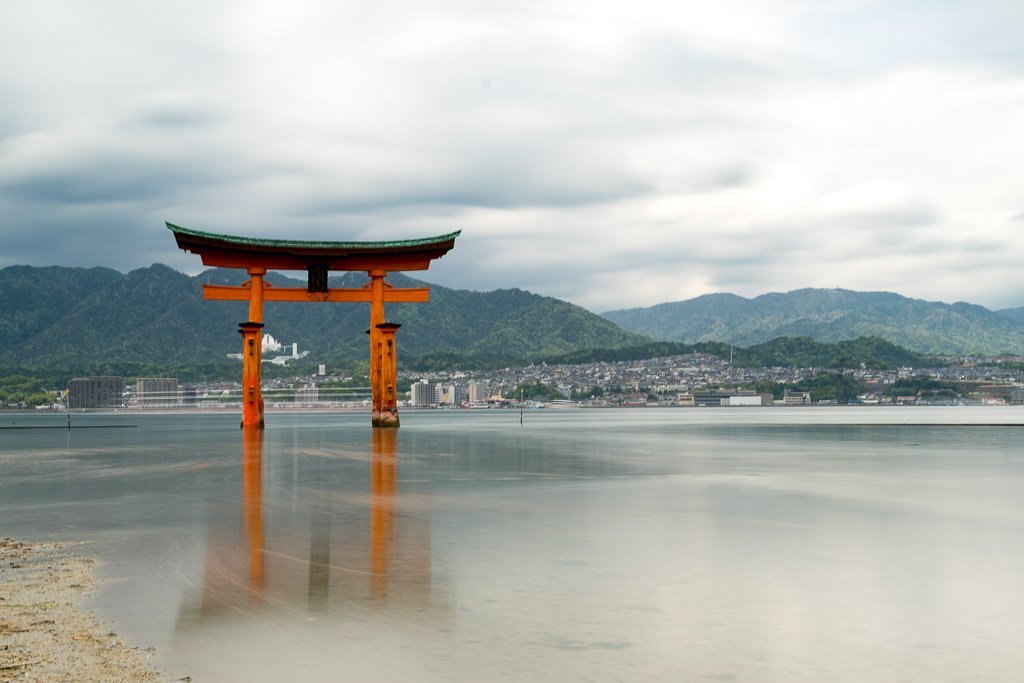
While you’re in Hiroshima it’s also worth a going on a day trip to the the island of Miyajima with the famous torii standing in the water.
3-week itinerary for Japan: Final thoughts
As you can see, we’ve left a few overflow days in our three-week trip. Depending on your interests, you can use them to spend some more time at the individual destinations. For example, we spent 10 whole days in Tokyo because we’re absolutely fascinated by major cities.
Alternatively, you could also go on more day trips from one of the individual destinations. You can find more suggestions for day trips in our posts on the individual cities.
Travel expenses: How expensive is Japan?
As we mentioned, Japan isn’t a cheap destination.
Accommodation is definitely the most expensive item on the list. An average mid-range hotel in a good location usually costs between 100 and 150 euros per night. Prices for beds in a hostel start from about 30 euros.
Local food, such as sushi or noodle soup, is relatively affordable. Western food, on the other hand, is expensive. Taking the subway is cheaper than in Germany, and the prices for express trains are comparable to the German Intercity-Express. You can save money on travel by taking regional trains or buses.
Bottom line: Overall, the travel costs for Japan are more or less comparable to travel costs in Western Europe. If you’re traveling on a budget and are prepared to compromise when it comes to comfort, you can travel through Japan relatively inexpensively.
Where to stay in Japan
Unfortunately, accommodation in Japan is relatively expensive and the hotel rooms are really tiny in the big cities. In Tokyo we had a total of 11 square meters and in Kyoto even only 9 square meters, and we still paid for the 140 euros per night.
Those are common prices for a mid-range hotel in a good location during the main travel season. But you can can get cheaper prices, e.g. by booking a bed in a hostel dorm or at one of the infamous capsule hotels. The latter are usually men-only though.
As the Japanese themselves travel a lot in their own country and like to book many months in advance, we recommend sorting out your accommodation as early as possible. In the off-season, you generally have a good chance of getting a room at short notice, but in spring or fall, most places fill up fast.
We booked all our hotels through booking.com. You can cancel most hotels at no cost up to a few days before your arrival date, so you can still remain flexible in your travel planning even if you book early.
Our tip: In our post on Japan hotel tips, we present all the hotels we stayed at during our trip to Japan and give you lots of practical tips for searching for a hotel in general. We also have a separate post for Tokyo where we help you find the right neighborhood to search for a hotel: Where to stay in Tokyo: Where’s the best place to stay in Tokyo?
Getting around in Japan
Public transport is excellent in Japan. There’s a huge network of trains and buses both within and between cities.
Traveling between cities
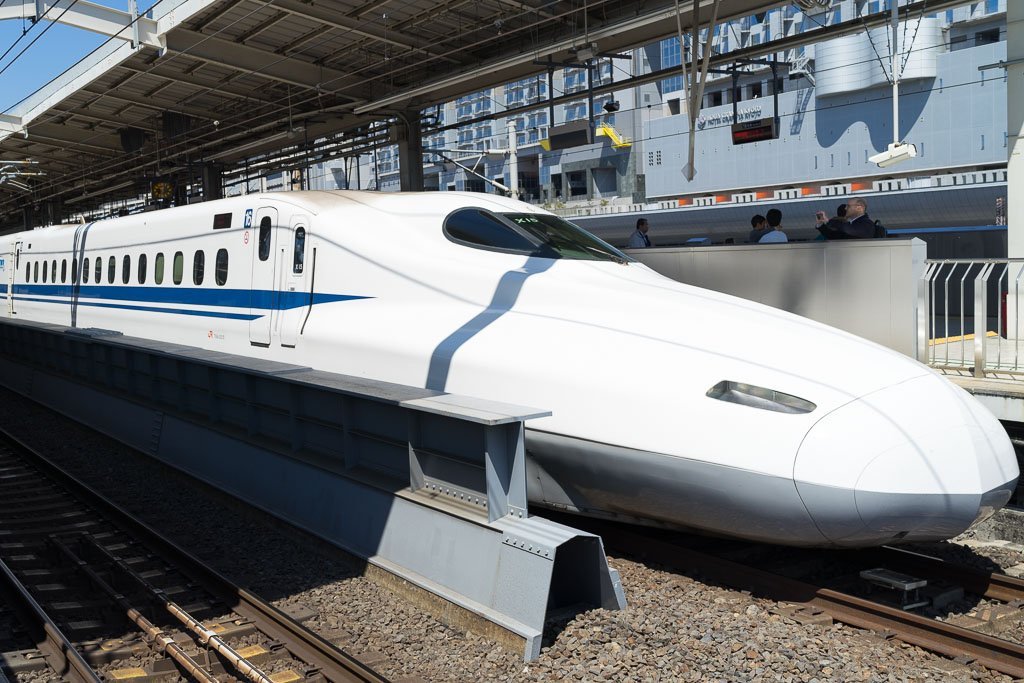
The fastest way to get from city to city is by train. For long journeys, the Shinkansen super-high-speed train is the best option. The trains travel at speeds of more than 300 kph. Since the Shinkansen don’t share their tracks with slower trains, they consistently travel at high speeds and can cover long distances in a very short time.
The trains run at short intervals and are extremely punctual and reliable. But the Shinkansen also has its price, which is why we recommend the Japan Rail Pass. That’s definitely the cheapest option to quickly travel cross-country.
We ordered the Rail Pass for two weeks before we went to Japan and were very happy with our decision. It allowed us to travel through the country very easily, flexibly, and above all fast. To help you figure our which Rail Pass option is right for you, we’ve written down our accumulated knowledge in a separate post.
If you want to save money, you can take buses or slow trains instead. But the savings come at the price of longer travel times.
To find out the fastest or the cheapest connection between two cities, we recommend the Hyperdia website.
Domestic flights are another option. But most of the time, they aren’t really any faster than riding the Shinkansen because the airports are located outside the big cities, while the train stations are in the center.
Public transport in the city
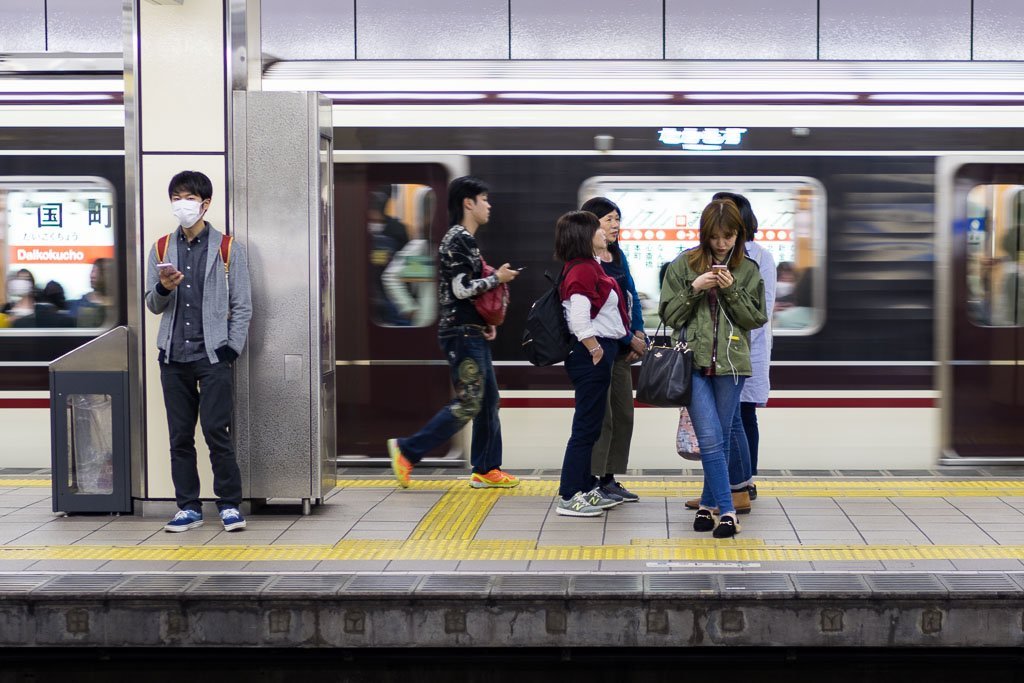
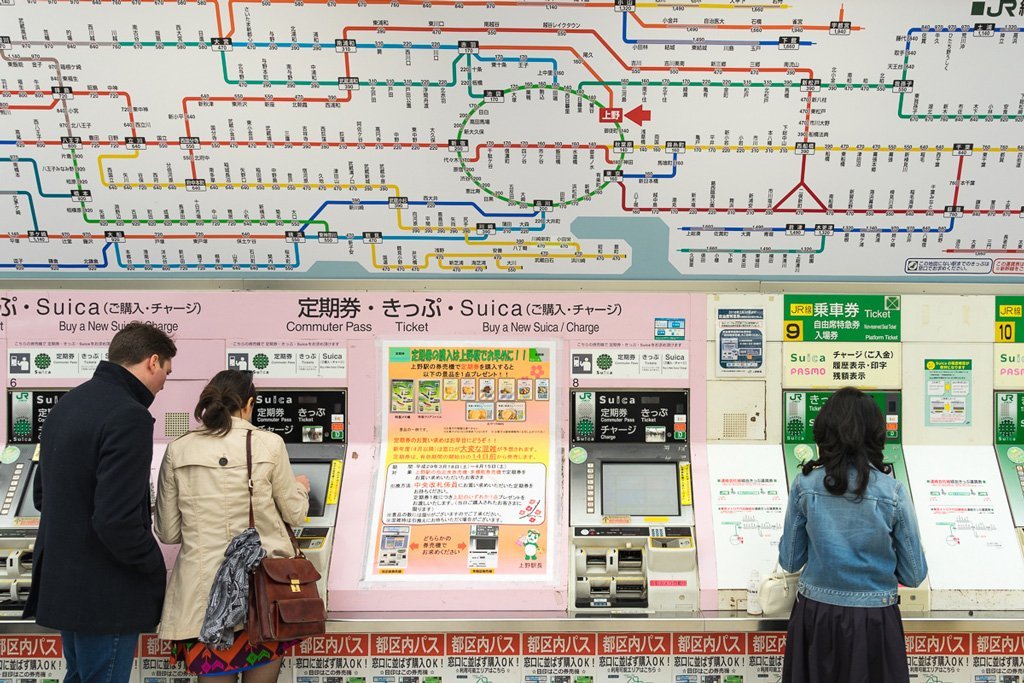
The big cities often have an excellent metro network, supplemented by a dense network of buses. Your best bet is to buy an IC card when you arrive. You can conveniently top up this card at the ticket machines and use it on almost all subways and buses. Just place it on the card reader and off you go. That’s a lot faster and less stressful than buying a single ticket every time, and it’s also a bit cheaper.
Each region also has its own ticket. Tokyo has the Suica card, which also works in Osaka and Kyoto. So you don’t need to buy a new card every time. Of all the places we went, Hiroshima was the only place the card didn’t work, but you can get everywhere on foot there anyway.
Money and paying in Japan
This section is all about money in Japan.
Currency and conversion
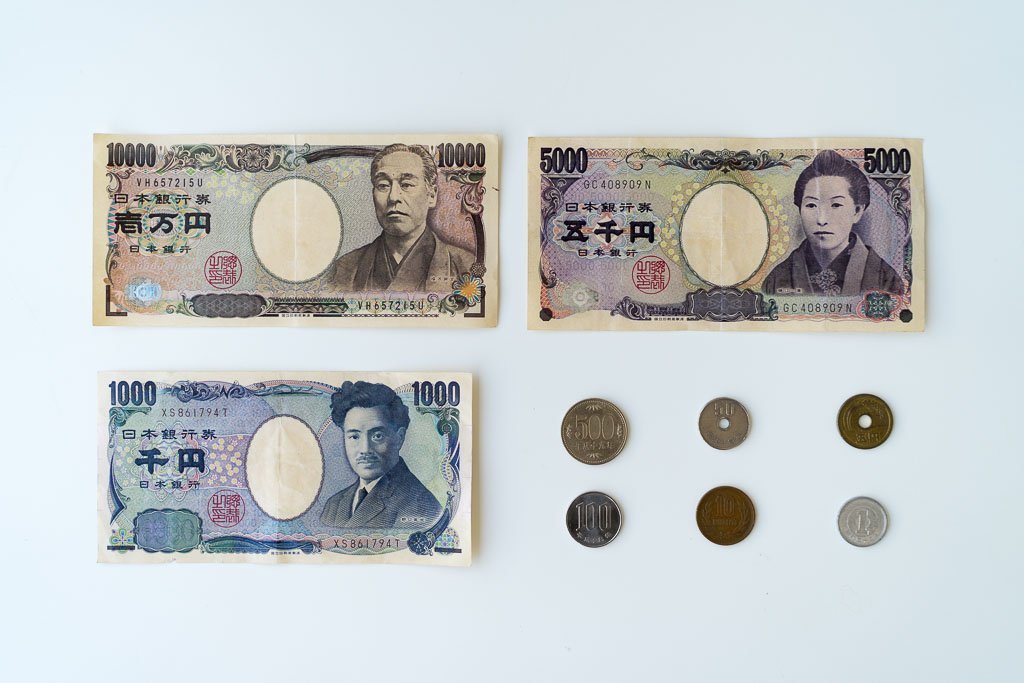
The official currency in Japan is the yen. 100 yen is worth about 0.80 euros; 1 euro is worth 120 yen.
The most common denominations are 10,000, 5,000, and 1,000 yen bills and a whole lot of coins that almost made our wallet come apart at the seams.
At many of the beverage vending machines that are everywhere in Japan, as well as in small supermarkets, you can also pay with the IC card you use for the subway. That’s pretty handy if you’re ever out of change, although that’s hard to imagine in Japan.
Paying by credit card is quite common in Japan. We always paid for our hotels with our travel credit card. Additional fees for credit card payments are rare.
Withdrawing money in Japan
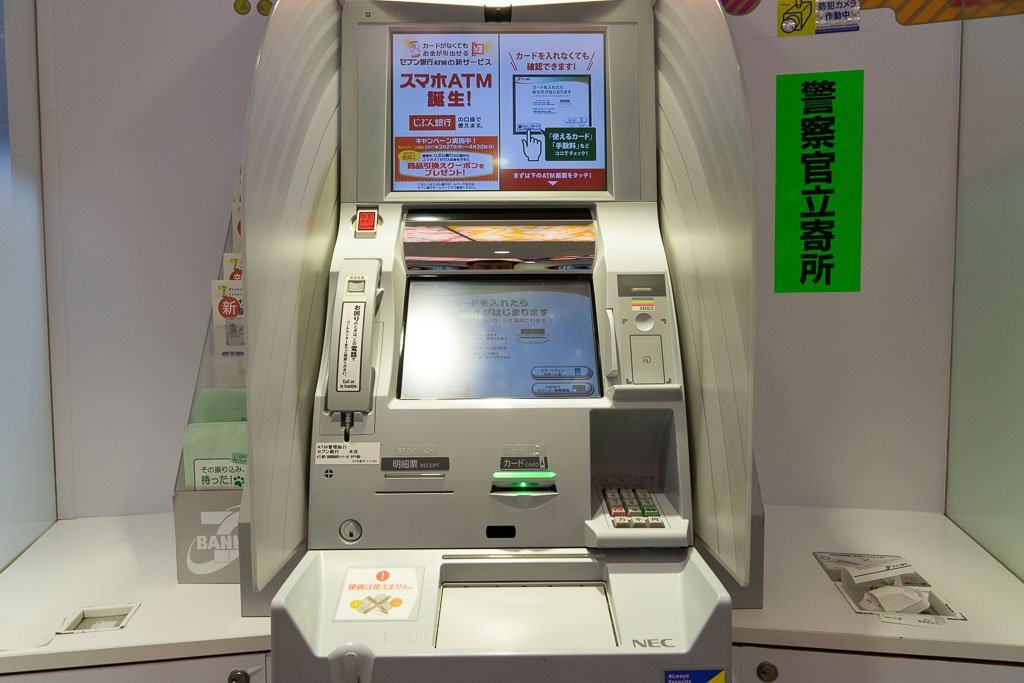
Of course, Japan has ATMs all over the place where you can withdraw money. The machines look a bit different than back home, but you can switch them to English and other European languages. Some machines don’t accept foreign cards, but we always managed to find a suitable machine.
We were able to withdraw money free of charge anywhere in Japan with our credit cards. That’s quite handy, because that way you can withdraw smaller amounts.
Tipping in Japan
Tipping is highly unusual in Japan and is sometimes even considered rude. So don’t even try to give anyone a tip.
You’ll always get exact change in restaurants and taxis.
Internet in Japan
The Internet in Japan is fast and reliable. We had a very good Internet connection at all our hotels, which was even fast enough for streaming movies. Many cafés and stores also offer free WiFi hotspots.
Mobile Internet, on the other hand, is quite expensive. There are special SIM cards for tourists so you can get mobile Internet. Cards are available at the airport and at tourist information bureaus.
We spent 5,500 yen (about 47 euros) for our SIM card including 3 GB of data. But there are cheaper offers if you don’t need that much data.
Eating and drinking in Japan
Japan has some real culinary highlights to offer and we miss the food there already.
Breakfast in Japan
Traditional Japanese breakfast is quite unusual for the western palate. It consists of rice, fish, pickled vegetables, and omelet.
Hotels usually serve a Japanese breakfast. But it usually isn’t included in the room rates. If you’d prefer a sandwich or something sweet, you’ll have to head to one of the café chains instead, or look for one of the many French-style bakeries, which are actually pretty common in Japan.
Traditional dishes in Japan
Of all Japanese dishes, sushi is certainly the most widely known. Sushi is much cheaper in Japan than in Europe and of course it’s much better there. We usually had sushi at least once per day.
You should definitely try out a kaiten sushi restaurant, which is more commonly known as ‘running sushi’ in Europe. The plates pass you on a little conveyor belt and you just take whatever you want. Depending on the restaurant, each plate costs the same (often only 108 yen) or there are different prices depending on the color of the plate.

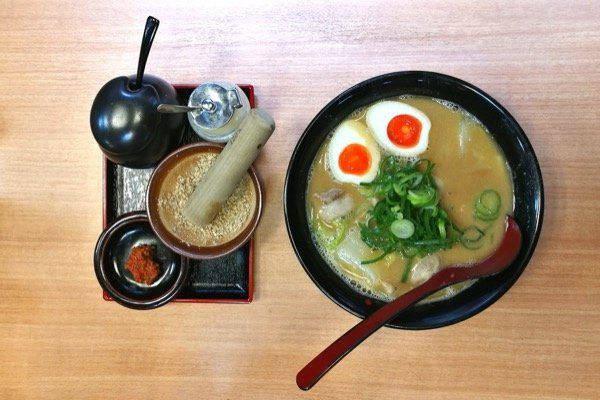
Traditional Japanese soups such as ramen and udon are also delicious. The soups are available with different main ingredients, such as meat, egg, or seaweed. At many soup restaurants, you have to place your order using a vending machine. It’ll give you a ticket to show the server or the cook.
We were very pleasantly surprised by soba. These are buckwheat noodles served cold with some horseradish and soy sauce for dipping. That might sound a bit strange at first, but it’s really very tasty.
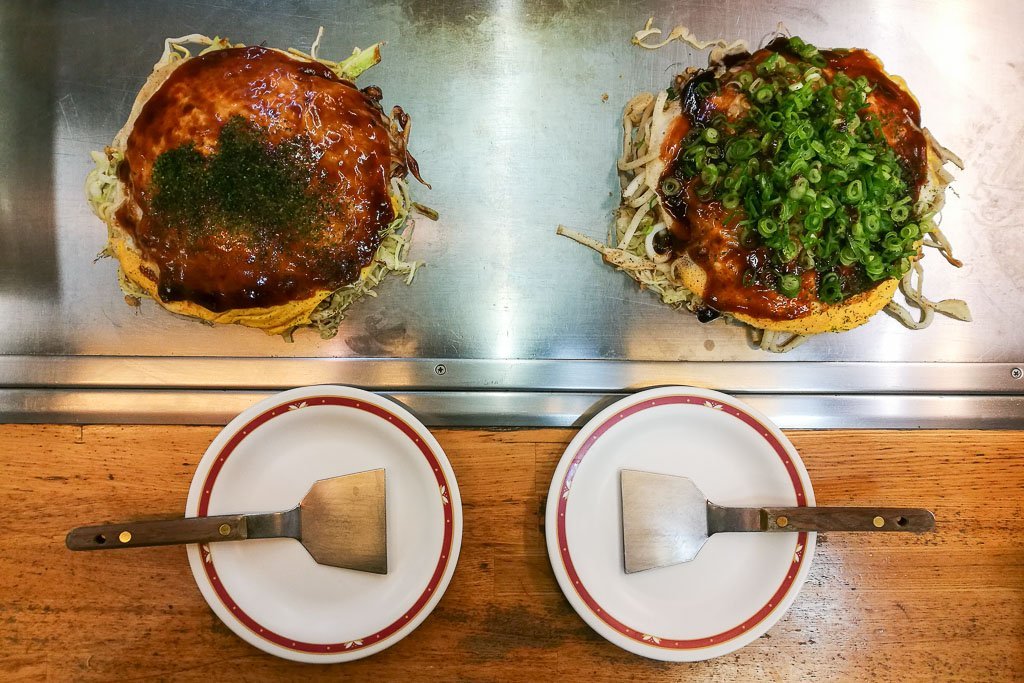
Another specialty are okonomiyaki. They’re a kind of crepe prepared on a hot plate with noodles, meat, seafood, cabbage, and egg, and then garnished with a spicy sauce. Delicious! This dish is especially popular around Hiroshima, but you also can get it in other areas of Japan too.
Japanese cuisine is very meat-based in general. Many restaurants have a barbecue on the table to fry your own meat. On the other hand, vegetables, and fresh fruits are pretty scarce. If you’re vegetarian or vegan, you won’t have an easy time finding something to suitable eat in Japan.
Drinks in Japan
Beer is relatively expensive in Japan. Prices for a small glass in a restaurant range from 3 to 8 euros. The best known brands are Asahi, Kirin, and Sapporo, all of which are pretty tasty.
Sake, a rice wine, is also a popular traditional beverage in Japan. Where we have a wine shelf in the supermarket, Japan has a sake shelf. Sake is served cold or hot and usually has an alcohol content between 15 and 20 percent.
Coffee is available at one of the many coffee shops, as well as at vending machines in almost every supermarket. But tea is more common in Japan, and is available as both a hot and a cold beverage.
There are vending machines all over the place where you can get water, soft drinks, tea, and coffee at reasonable prices (about 1 euro).
Safety in Japan
Japan is one of the safest countries in the world. Incidents of robbery or violence against tourists are very rare, and theft isn’t a big problem in Japan either.
You should exercise some caution in the nightlife districts in Tokyo and Osaka, but it’s still safer there than in many European cities.
However, earthquakes are a real danger in Japan. There are about 1,500 earthquakes every year, many of which can be felt. When we were in Tokyo, there was one time when the earth shook a little bit. Most earthquakes are harmless, but every few years theres a larger quake.
Language
Finally, we’ll get to the most complicated part of a trip to Japan: communication. Most Japanese do not speak any English at all or only very few words here and there.
But that doesn’t stop them from talking your ear off in Japanese. It’s always very funny at the supermarket checkout. The cashiers let loose an endless swath of Japanese words listing all the products and prices as they scan your things. Just smile and nod and you’ll be fine.
At railway stations and tourist points of interest, the most important signs also usually also provided in English. In more touristy areas, restaurants often also have an English menu although the translations can be a bit odd at times. Apart from that, it’s common for restaurants to have pictures or showcases showing the food, so you at least you can see what you’re ordering.
Overall, you can get by pretty well despite the communication problems. The Japanese are very helpful and considerate, and despite the language barrier, communication always seems to work out somehow.
Our tip: Download the Google Translate app and the translation files for the Japanese language (within the app) to your mobile phone (for Android – for iOS) before your trip to Japan. Using the camera mode, this app can often help translate sentences or individual words. It actually was a lot of help.
Pro tip: Smiling always helps in Japan.
And Japanese people are often happy enough if you speak a few words of Japanese. Hello and thank you are usually enough, so we’ve listed the most important words for you here.
At first, we though it’d be easy: Hello is konnichiwa and bye is sayounara. But we were surprised to learn that these words are hardly ever used in everyday speech.
At least konnichiwa is used as a greeting in the afternoon, but sayounara rarely used at all. It actually means ‘farewell’, and that isn’t something you say everyday in English either.
But here are the most important words:
Good morning – ohaiyou gozaimasu
Good afternoon – konnichiwa
Good evening – konbanwa
Bye – itte kimasu
Thank you – arigato
Thanks (more polite) – arigato gozaimasu
Yes – hai
No – iie
One – ishi
Two – ni
Three – san
Even more Japan travel tips
So, those were all our tips for Japan condensed into a single post. In the relevant paragraphs we’ve also added links to more detailed posts on the respective topics, so you can find even more information if you need it.
Have you ever been to Japan? If you have any other tips for us, please let us know in the comments below. The same goes if you have any questions of course.