
A List of Our Hotels in Japan & 7 Hotel Booking Tips
Latest update: November 14, 2022
Our general hotel booking tips for Japan, hotel recommendations in every price range, and all the hotels we stayed at during our trip to Japan!
We spent three and a half weeks traveling through Japan. Finding places to stay in Japan was especially tricky. Unfortunately, hotels in Japan are relatively expensive and the hotel rooms are really tiny.
In this post, we’ll present all the hotels where we stayed on our trip. We’ll also give you a few very good alternatives for each destination for every price range and finally we have some general tips on booking a hotel in Japan for you.
Where we stayed in Japan
We booked all our hotels through booking.com A big advantage there is that you can cancel most of the accommodations free of charge up until a few days before your stay so you still remain flexible if you want to change your travel plans at short notice.
Like we said, hotel prices in Japan are quite high, especially during the peak travel season in spring and autumn. All our hotels were average middle class hotels in a good location. We were in Japan during the cherry blossom season, booked at relatively short notice, and so we paid a premium.
If you book early enough or travel to Japan outside the main travel season, you’ll probably get much cheaper room rates than we did.
Where we stayed in Tokyo
We stayed in two different hotels in Tokyo. At first we spent 8 nights at the Super Hotel Lohas Akasaka before we were lucky enough to stay at the noble Intercontinental Tokyo Bay for two nights.
Super Hotel Lohas Akasaka
Super Hotel is a Japanese hotel chain known for its good value for money. There are almost 20 Super Hotels in Tokyo alone.
Our hotel was in the Akasaka neighborhood, strategically located near public transport so we could quickly reach all the sights in Tokyo. The subway is only 5 minutes away and there are several restaurants, bars, and supermarkets in the immediate vicinity of the hotel. So the location was absolutely perfect.
The 11 sq m room is very small, but that’s normal for a hotel in this price range in Tokyo. If you’re traveling with a very large suitcase, you might have trouble fitting everything in the room.
The decor is very modern, but the bed was a bit uncomfortable. We must have been really unlucky though, because many reviewers have nothing but praise for the beds.
Due to the very small size of the room, we decided to skip taking photos. But you can check out photos of the hotel on booking.com.
The hotel also has its own onsen, a traditional hot bathhouse. There are separate times for men and women, but we didn’t get round to trying it ourselves.
We paid 141 euros per night for a double room.
Our verdict: Recommended.
InterContinental Tokyo Bay
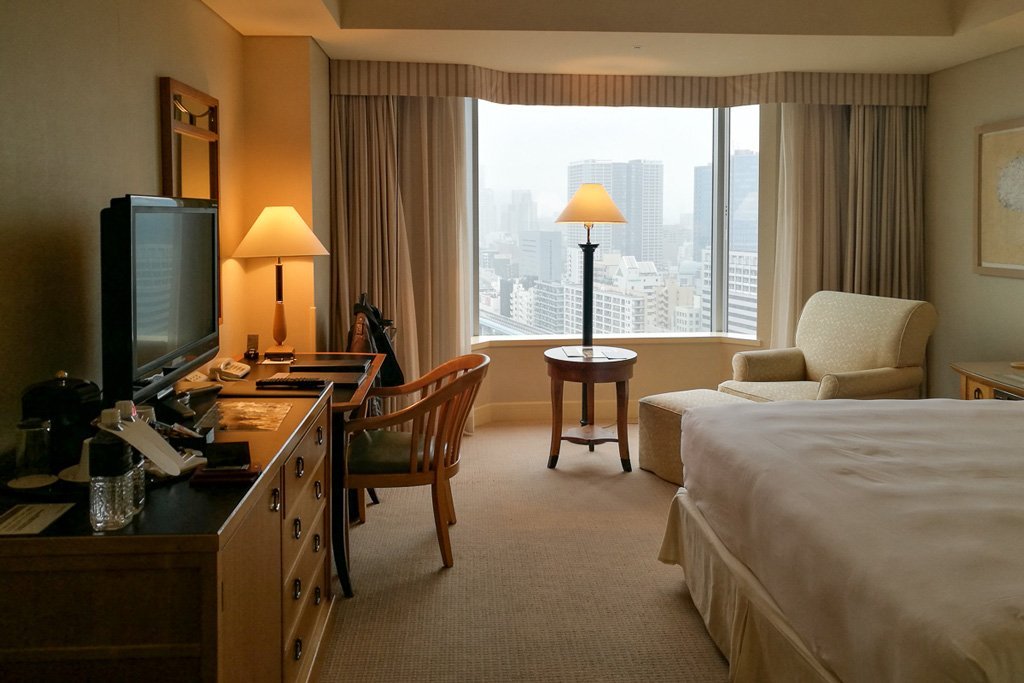
At the invitation of IHG Hotels, we spent two additional nights at the InterContinental Tokyo Bay. Of course, compared to our previous 11 sqm room, the difference was like day and night.
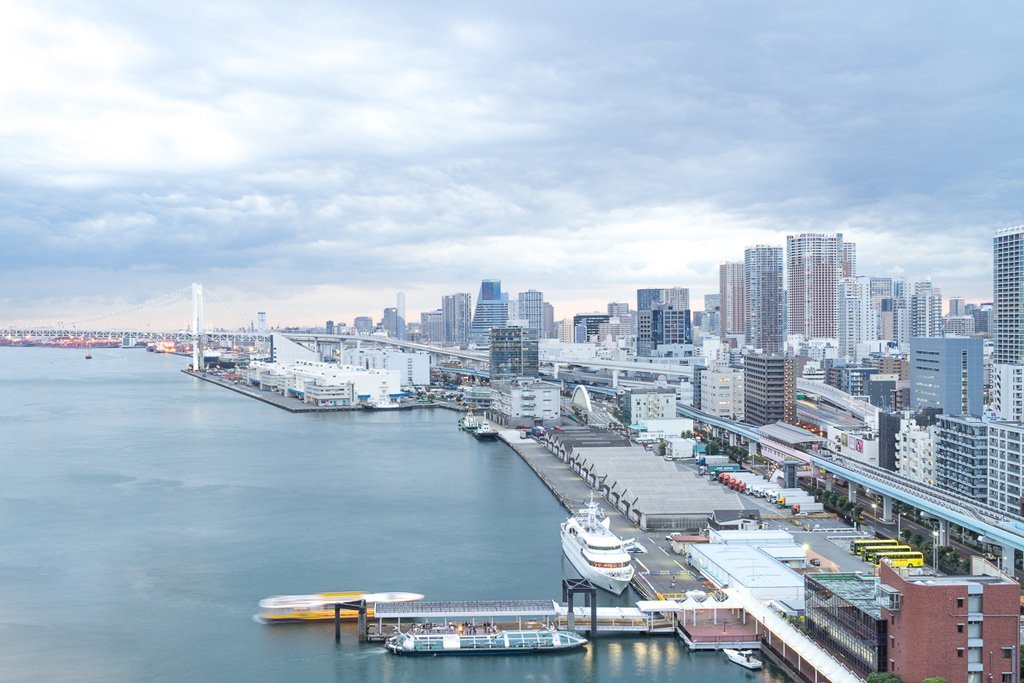
The rooms at the InterContinental are spacious, have a modern decor and the view of the bay and the Rainbow Bridge is simply amazing!
The hotel is within walking distance of the famous Tsukiji fish market and the train station is just around the corner with trains going to all other parts of Tokyo.
Our verdict: Really awesome!
Other hotels in Tokyo
Since Tokyo is huge and confusing, we’ve dedicated an entire post to finding the best place to stay there. We introduce you to the individual districts, show you the advantages and disadvantages of the different districts, and give you three hotel tips for every price range.
Where we stayed in Osaka
Fortunately, hotels in Osaka offer a lot better value for money than in Tokyo. So you get a little more space for your money.
Hotel Cordia
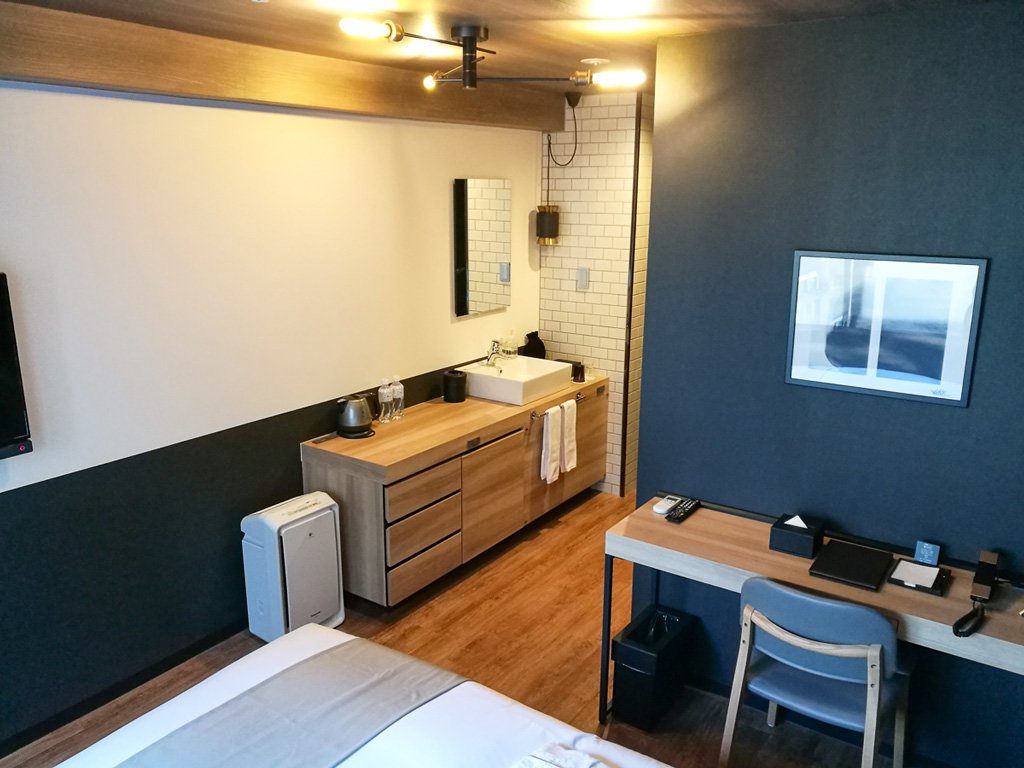
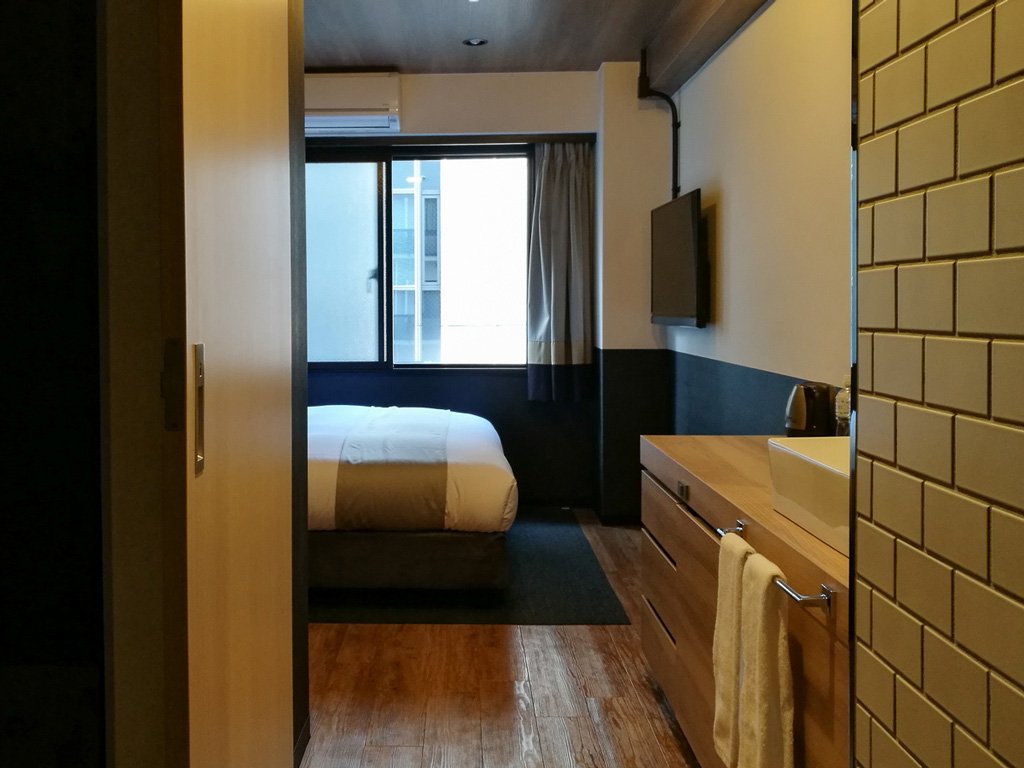
We stayed at the Hotel Cordia in Osaka. The hotel is relatively new. The decor of the rooms is modern and the bed was also very comfortable. There’s a coffee machine in the lobby where you can get free coffee and tea. Of course we used this extensively.
The location is good too. There’s subway station for the Yotsubashi Line right next door. From there, it’s only one stop to Nishi-Umeda and three stops to Namba Station. Those are the most important points for visitors to Osaka.
We paid 147 euros per night and got a very nice 18 sqm room.
Our verdict: Absolute recommendation!
Other hotels in Osaka
Of course Osaka also has lots of other recommended hotels in every price range:
- Good & Cheap: Picnic Hostel
- Mid-range: Hotel The Flag
- Luxury: InterContinental Hotel Osaka
Where we stayed in Kyoto
We actually booked an apartment in Kyoto via Airbnb. Unfortunately, the place was completely unacceptable, so we had to scramble to find another place to stay at eight o’clock in the evening. 97% of the hotels on booking.com were already fully booked, but we still managed to find something in the end.
Tabiya Hotel
Attention: The Tabiya Hotel is currently closed and we don’t know if it will open again.
We honestly though hotel rooms don’t get any smaller than in Tokyo. Boy, were we in for a surprise! The Tabiya Hotel provided us with an incredible 9 sqm, including the bathroom of course.
But at least the bed was very comfortable and the decor was very new and modern. If we’d been traveling with a lot of luggage, it would have a real headache though.
Then again, the location was excellent. The hotel is situated in a quiet side street off of Karasuma Dori, which is basically Kyoto’s main street. The subway, restaurants, and even some of the main attractions are within walking distance of the hotel.
But what a bargain: We only had to shell out 144 euros per night for our tiny room.
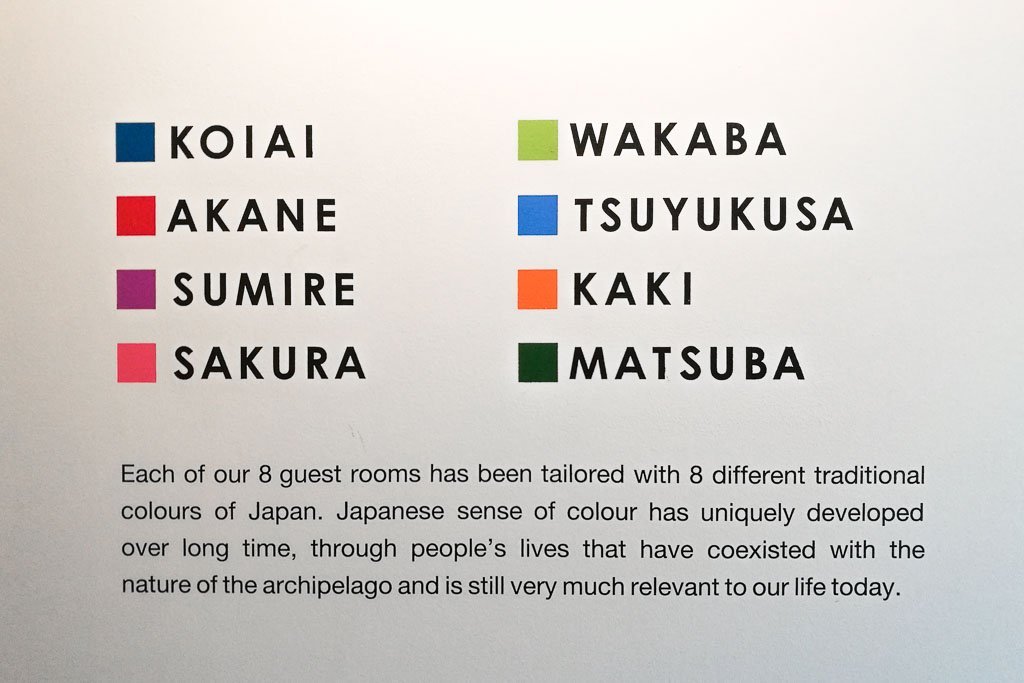
Our tip: We stayed in the Tsuyukusa room and felt very comfortable there. The rooms Wakaba, Tsuyukusa, Kaki, and Matsuba rooms all face the street and each have a large panoramic window. That made our room feel very homey and bright. The rooms facing the back, Koiai, Akane, and Sakura, only have small windows.
Due to the size of the room we didn’t take any photos, but the photos on booking.com do the rooms justice, so you can check them out there.
Our verdict: If you don’t mind the size, then the hotel is absolutely recommended!
Other hotels in Kyoto
Kyoto is the main tourist destination in Japan. That means there are loads of hotels there, but they still tend to fill up during the main travel season.
Cheap hostels in Kyoto:
Mid-range hotels in Kyoto:
Upscale hotels in Kyoto:
Where we stayed in Hiroshima
Hiroshima was a real blessing for our budget because there were actually a few reasonable hotels for under 100 euros.
Hotel Washington
The Hotel Washington is located right in the center of Hiroshima. All the important sights are within walking distance of the hotel and there’s no lack of restaurants either.
The hotel felt pretty new, our room was very spacious by Japanese standards at 18 sqm, and the bed was comfortable. Only the sheets were a bit weird. There was only a thin sheet separating us from the comforter, which didn’t have a cover. But now we’re just nitpicking.
We only paid 75 euros per night, about half as much as in all the other places.
Our verdict: Recommended!
Other hotels in Hiroshima
These three hotels in different price categories are also recommended:
- Cheap: Roku Hostel
- Mid-range: Hotel Intergate
- Luxury: Rihga Royal Hotel
Where we stayed in Miyajima
We spent the last night of our trip on the small island Miyajima, which is located near Hiroshima. During the day, the island is literally overrun by tourists.
But since almost all the visitors only come to Miyajima on a day trip from Hiroshima, it’s almost deserted in the evening.
Hotel Oyado Tsukiusagi
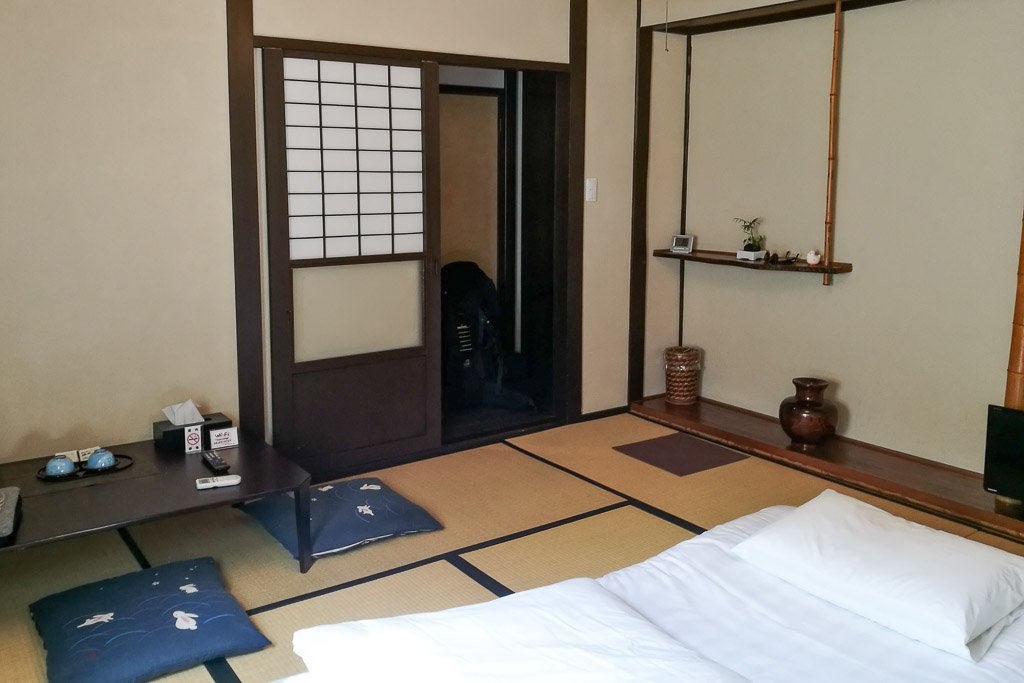
On Miyajima we stayed at a ryokan, a traditional Japanese hotel. The rooms are covered with bast mats, the walls are made of bamboo, and you sleep on futons lying on the floor. The futons are more comfortable than they look, but they’re no match for a comfortable bed.
The hotel is a small family business with only three rooms and the owners are very welcoming, even though they only speak a little bit of English. When we arrived, the owner took a picture of us with an Instax camera, which she put straight on the wall with the other guests.
The location is perfect. The hotel is located directly by the pier and only a minute from the main road with all restaurants.
We spent 113 euros for our night there.
Our verdict: Recommended!
Other hotels on Miyajima
The selection of hotels on Miyajima isn’t all that great. But even so, there are options for every budget.
- Cheap: Miyajima Grand Hotel Arimoto
- Mid-range: Miyajima Guest House Mikuniya
- Luxury: Kurayado Iroha (including breakfast and dinner)
Our hotel booking tips for Japan
Finally, we want to leave you with some general hotel booking tips for Japan so your trip will be a complete success.
#1 Book early
Western visitors are a minority in Japan. Nevertheless, the hotels are always well booked. Chinese, Koreans, and especially the Japanese themselves travel a lot within the country and generally book their hotels many months in advance.
So when you plan your trip, you should book your hotels as early as possible. At booking.com you still have the option to cancel most bookings, so you can remain flexible despite booking so early.
If you book at too short notice, the selection of free hotels gets very scarce, especially in spring and autumn, and the prices will hardly go down either.
#2 Look out for non-smoking rooms
Many hotels in Japan have smoking rooms and non-smoking rooms. Make sure you book a non-smoking room, of course unless you want a smoking room.
When you choose a room, it always says whether it’s a smoking or a non-smoking room. If it doesn’t say anything, it’s usually a non-smoking hotel.
#3 Location, location, location
Make sure you book your hotels in a good location. Of course, booking a hotel a bit out of town is cheaper. But the money you save will be offset with long travel times in full buses and trains. It’s usually a much better idea to spend a few euros extra and book a hotel in a good location.
All the hotels we’ve presented here are in a good location. So you can book them without hesitation.
#4 Reduce your luggage
Especially in Tokyo and Kyoto, hotel rooms are really tiny. We traveled with a large backpack and a small carry-on roller bag and that was the most we could have possibly fit into these rooms.
If you’re traveling with two large suitcases, you’ll really have a problem in the small rooms. There are usually no closets available, and the space is so limited that the bed is the only place to open a large suitcase.
So you have two alternatives: Take less luggage or book larger, more expensive rooms.
#5 Book breakfast or not?
Breakfast is only very rarely included in the room rate at Japanese hotels. You usually have to book it separately. However, unless you’re staying at a luxury hotel, breakfast isn’t adapted to a western palate.
And most of the time it wasn’t the best value for money anyway, so we booked all our rooms without breakfast. In the big cities, we had breakfast at coffee places like Starbucks or bought something at one of the many local supermarkets.
#6 Cosmetics for women
At some hotels we got a small bag with creams and cosmetics for women when we checked in. That’s a nice touch, but we’d still advise against using it.
Many cosmetics in Asia contain whitener, because light skin is considered particularly beautiful in Asia. Since you can probably can’t decipher what’s in the creams, you might want to avoid using them, unless you want extra-light skin of course.
#7 AirBnB – yes or no?
As we mentioned, we actually booked an apartment in Kyoto via Airbnb. We’d had good previous experiences with Airbnb and stayed at some really nice and cheap apartments.
But things went completely wrong for us twice in Japan and the customer service at Airbnb isn’t particularly helpful. Plus, for most offers, the cancellation policy is much more inflexible than for a hotel.
So from now on, we’ll only be giving booking accommodations via Airbnb under special circumstances and can’t really recommend it wholeheartedly, but of course it’s still an alternative for finding a place to stay.
Your hotel tips for Japan
Have you ever been to Japan? Do you have hotel recommendations for us? Then let’s have them! We look forward to your tips in the comments below!